Share this Article
Learning that you or your child has an atrial septal defect (ASD) can be worrying, especially when the word "heart defect" is involved. However, an ASD is one of the most common congenital heart conditions, and with timely treatment, most people go on to live healthy, active lives.
Not every ASD requires surgery. Small defects may close on their own, while larger ones can lead to complications if left untreated. Modern treatment options, including ASD device closure and ASD surgery, have made repairing this condition safer and more effective than ever.
This guide explains what an atrial septal defect is, when treatment is needed, available procedures, recovery, success rates, and the cost of ASD surgery in India.
What is an atrial septal defect?
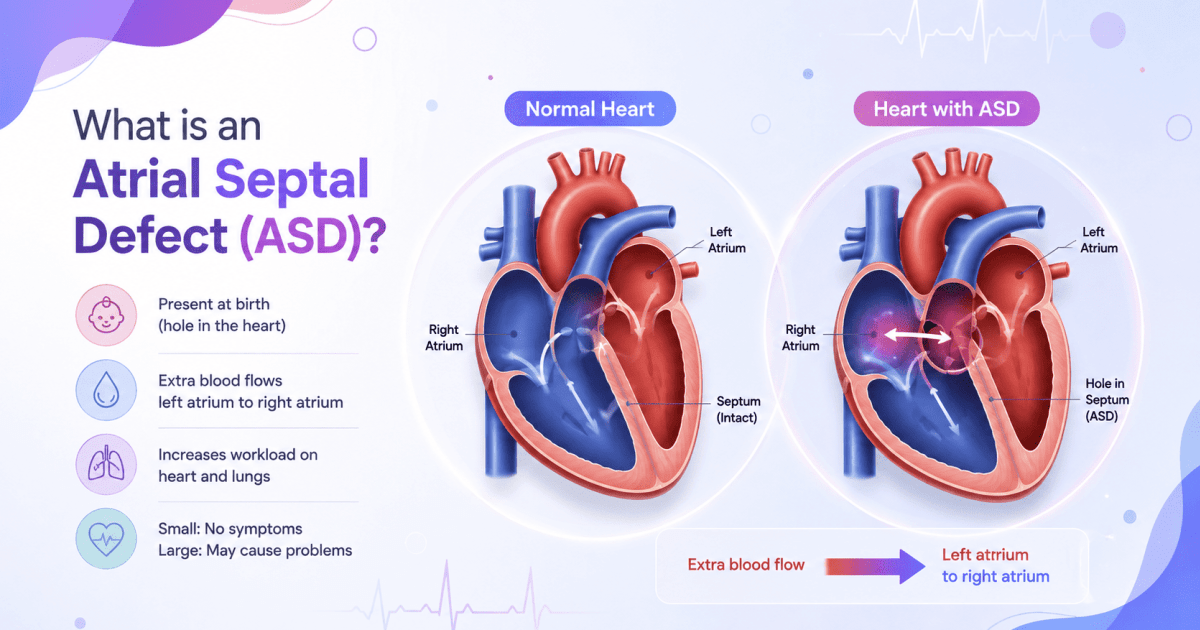
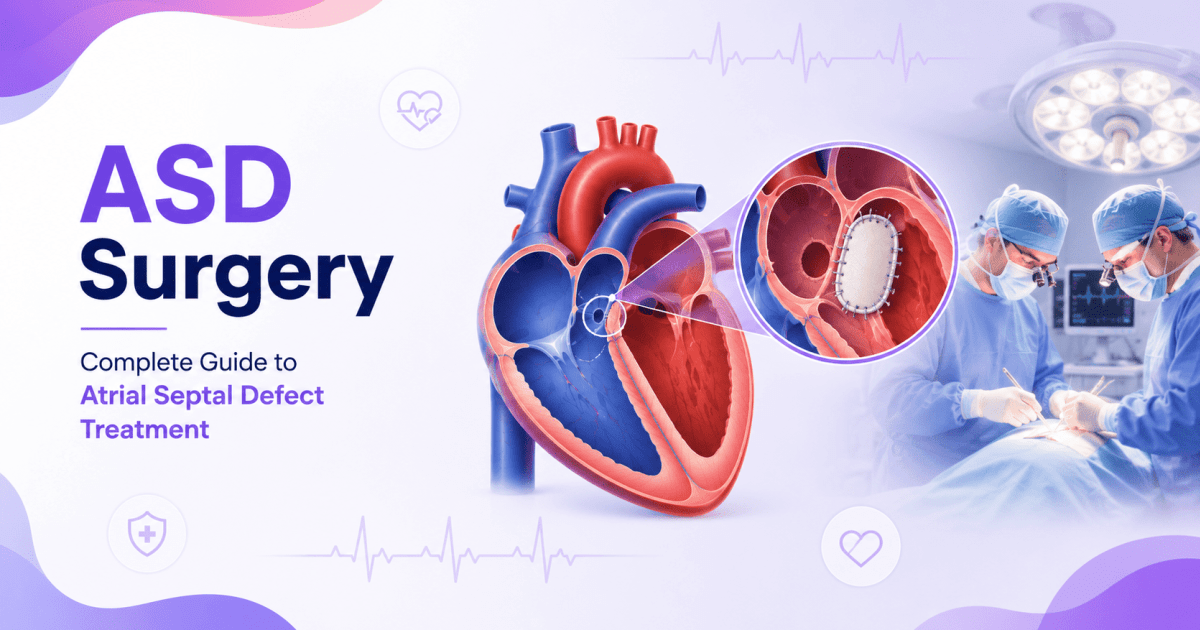
An atrial septal defect (ASD) is a congenital heart defect in which there is a hole in the wall (septum) separating the heart's two upper chambers, known as the atria. Since the defect is present at birth, it is often referred to as a hole in the heart.
Normally, the septum prevents oxygen-rich and oxygen-poor blood from mixing. When an ASD is present, extra blood flows from the left atrium to the right atrium. Over time, this increases the workload on the right side of the heart and the lungs.
Small ASDs may not cause symptoms for years, but larger defects can lead to complications if they remain untreated.
Symptoms of atrial septal defect
Many children with a small ASD appear completely healthy and may not experience noticeable symptoms. Larger defects, however, can affect normal heart function.
Common symptoms include:
Shortness of breath
Easy tiredness during physical activity
Frequent respiratory infections
Heart murmur detected during a routine examination
Irregular heartbeat
Swelling in the legs or feet in adults
If an ASD remains untreated for many years, it may cause right-side heart enlargement, increased pressure in the lungs, or abnormal heart rhythms. Some patients may also develop persistent rhythm problems that require pacemaker surgery to help maintain a regular heartbeat.
How is ASD diagnosed?
Doctors often detect an ASD while evaluating a heart murmur or unexplained symptoms.
Diagnosis may include:
Echocardiogram (2D Echo)
Electrocardiogram (ECG)
Chest X-ray
Cardiac CT or MRI, when needed
Cardiac catheterization in selected cases
These tests help determine the size and location of the defect and guide the most appropriate treatment plan. Similar cardiac evaluations are also used before procedures such as aortic valve replacement, where doctors need a clear understanding of the patient's heart function before surgery.
Does every ASD require treatment?
No. Treatment depends on the size of the defect, symptoms, and its effect on heart function.
A small ASD that does not affect blood circulation may only require regular monitoring. However, doctors usually recommend treatment if the defect:
Causes symptoms
Leads to enlargement of the right side of the heart
Increases blood flow to the lungs
Raises the risk of future complications
Early treatment can help prevent long-term heart damage and improve quality of life.
ASD surgery and treatment options
Treatment is selected after evaluating the size, location, and type of the defect. The two most common approaches are catheter-based ASD closure and ASD heart surgery.
ASD device closure
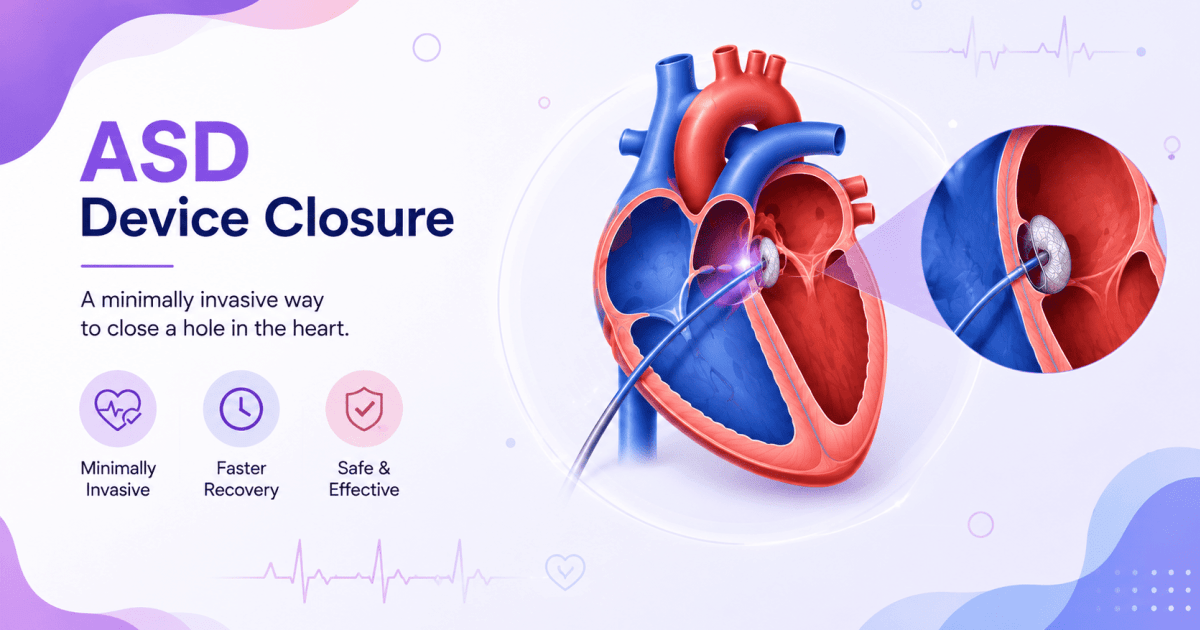
ASD Device Closure is a minimally invasive procedure suitable for many patients with specific types of atrial septal defects.
A thin catheter is inserted through a blood vessel in the groin and guided to the heart. A specially designed closure device is then placed across the hole, where it expands to seal the defect. Over time, the body's tissue grows around the device, making it a permanent part of the heart.
Since this method does not require opening the chest, recovery is usually faster than traditional surgery.
ASD heart surgery
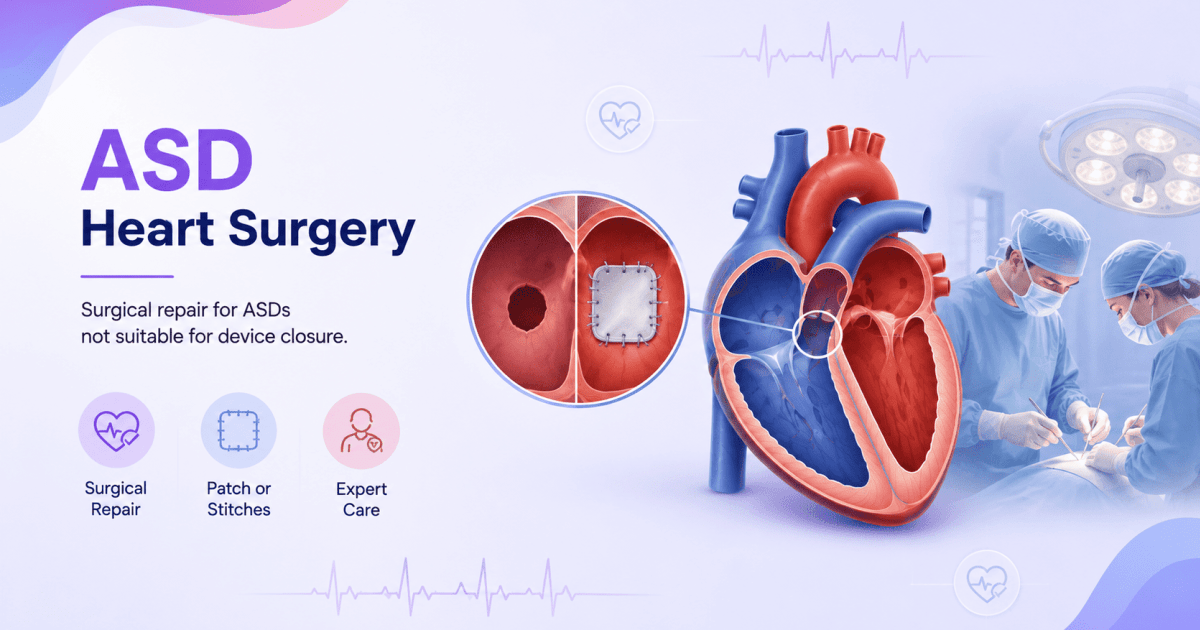
Some ASDs cannot be treated with a device because of their size, location, or structure. In these cases, doctors recommend ASD surgery.
During surgery, the surgeon repairs the defect by closing it with stitches or covering it with a surgical patch. The approach depends on the patient's condition and the complexity of the defect.
Both treatment options have excellent outcomes when performed by experienced cardiac specialists. The choice between a minimally invasive procedure and surgery is similarly important in other valve conditions, including cases that require mitral valve replacement.
Procedure of ASD surgery
The ASD surgery procedure depends on the size and location of the defect. If the hole cannot be closed using a device, open-heart surgery is usually recommended.
Before the procedure, doctors perform blood tests, an echocardiogram, and other heart evaluations to understand the patient's condition. During surgery, the patient is given general anesthesia, and in most cases, a heart-lung machine temporarily takes over the heart's function while the defect is repaired.
The surgeon closes the hole using stitches or a surgical patch made from the patient's own tissue or a medical-grade material. Once the repair is complete, the heart is checked to ensure normal blood flow before the surgery is finished.
Although the idea of heart surgery may seem intimidating, it is a well-established procedure with excellent outcomes when performed by experienced cardiac surgeons.
Recovery after ASD surgery
ASD surgery recovery varies from person to person, but most patients recover well with proper care and regular follow-up. Recovery planning is also an important part of other major cardiac procedures, including bypass surgery (CABG), although the timeline varies depending on the surgery performed.
After surgery, patients spend a short period in the Intensive Care Unit (ICU), where their heart rate, oxygen levels, and blood pressure are closely monitored. Once stable, they are shifted to a regular hospital room before discharge.
Recovery at home generally includes:
Taking prescribed medications
Keeping the surgical incision clean
Avoiding strenuous physical activity until advised
Eating a balanced diet
Attending follow-up appointments
Many children return to school within a few weeks, while adults can gradually resume work and normal activities based on their doctor's recommendations.
Atrial Septal Defect (ASD) VS Ventricular Septal Defect (VSD)
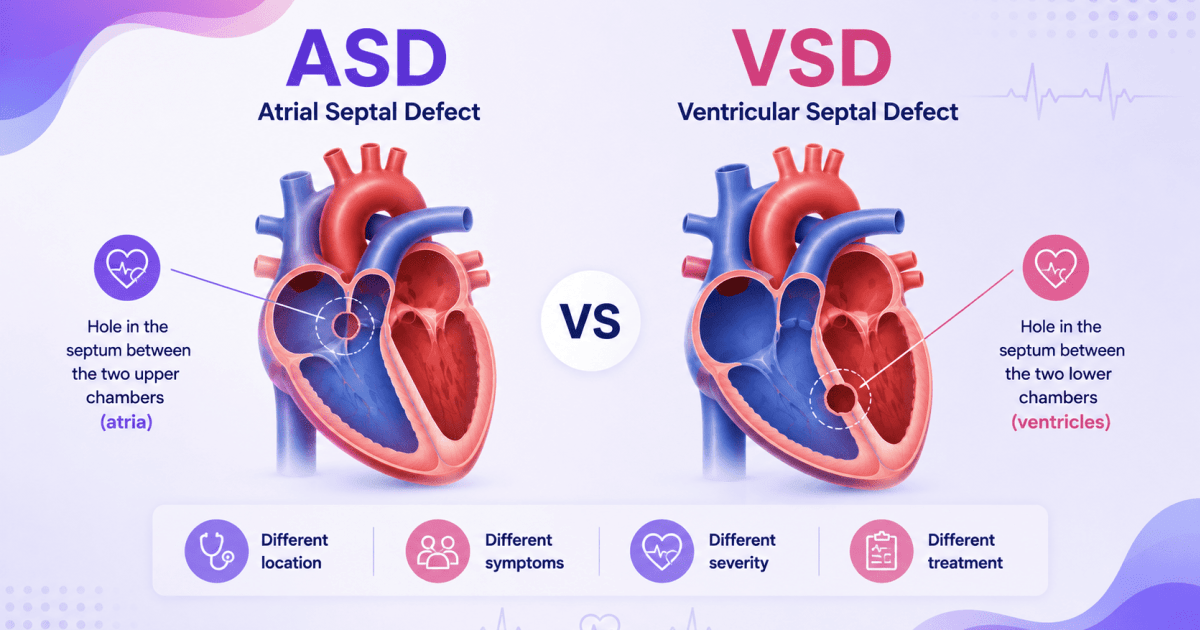
People often get confused between ASD and VSD, but they affect different parts of the heart.
An atrial septal defect (ASD) is a hole between the two upper chambers (atria), whereas a ventricular septal defect (VSD) is a hole between the two lower chambers (ventricles).
Both conditions can increase the heart's workload, but they differ in severity, symptoms, and treatment. Your cardiologist will recommend the most appropriate approach based on the type and size of the defect.
Success rate of ASD surgery
The ASD surgery success rate is generally very high, especially when the condition is diagnosed and treated before complications develop.
Most patients experience significant improvement in heart function and quality of life after successful treatment. Regular follow-up visits remain important to monitor recovery and ensure the heart continues to function normally over time. In more advanced cardiac conditions, treatment may involve more complex procedures such as heart transplant surgery, but this is generally considered only when other treatment options are no longer effective.
ASD surgery cost in India
The ASD surgery cost in India depends on several factors, including:
Type of treatment (device closure or surgery)
Hospital and city
Surgeon's experience
Patient's age and overall health
Length of hospital stay
Since every patient's condition is unique, it is best to consult a cardiac specialist or hospital for an accurate treatment estimate.
Conclusion
An atrial septal defect is a treatable heart condition, and early diagnosis plays an important role in preventing future complications. Whether the defect is managed through ASD device closure or ASD surgery, timely treatment can improve heart function and support a healthy, active life. For patients with severe and advanced heart conditions, treatment decisions may involve further assessment, including heart transplant eligibility, when a transplant is being considered.
If you or your child has been diagnosed with an ASD, consult an experienced cardiac specialist at Getbeds to understand the most suitable treatment option. Early care and regular follow-up can make a significant difference in long-term heart health.
Frequently Asked Questions
An atrial septal defect is a congenital heart condition in which there is a hole in the wall separating the heart's upper chambers, allowing extra blood to flow to the right side of the heart.
No. Small ASDs may only need regular monitoring, while larger defects or those causing symptoms often require device closure or surgery.
Device closure is a minimally invasive catheter-based procedure that seals the defect without opening the chest. ASD surgery is performed when the defect cannot be treated safely with a device.
The ideal timing depends on the size of the defect, symptoms, and heart function. Your cardiologist will recommend the most appropriate time for treatment.
ASD surgery has a high success rate, and most patients recover well with improved heart function and long-term outcomes.
The cost varies depending on the type of procedure, hospital, city, and the patient's medical condition. A consultation with a cardiac specialist can provide a personalised estimate.
Disclaimer:
This blog is for informational purposes only and does not constitute scientific recommendations. Always consult a certified healthcare expert for analysis and remedies.