Share this Article
Can a heart that has stopped working properly ever be given a second chance? For thousands of patients across India living with advanced heart failure, the answer is often yes, and that answer is a heart transplant.
A heart transplant is one of the most complex procedures in modern cardiac care. It involves removing a heart that can no longer support the body and replacing it with a healthy donor heart. It's a major surgery, no doubt, but decades of progress in surgical technique, donor matching, and post-operative monitoring have made outcomes far better than they used to be.
If a doctor has recently mentioned a transplant as an option for you or someone you love, it helps to understand what actually happens before, during, and after the surgery. This guide walks you through what a heart transplant involves, who typically needs one, how the surgery works, what recovery looks like, and what it costs in India.
What is heart transplant surgery?

A heart transplant is an operation where surgeons replace a diseased heart with a healthy one from a deceased donor. Doctors usually recommend it only after medications, implanted devices like pacemaker surgery, or earlier heart surgeries have stopped being enough to keep the heart functioning well.
The surgery itself is carried out by a large, specialised team; cardiac surgeons, cardiologists, anaesthesiologists, intensivists, and transplant coordinators all play a part. Because donor hearts are scarce, every patient goes through a thorough medical evaluation before their name is added to the transplant waiting list.
Why would someone need a heart transplant?
Transplants aren't usually the first option doctors reach for. They come into the picture once other treatments have been tried and haven't worked well enough.
Some of the conditions that may lead a doctor to recommend a transplant include:
Advanced or end-stage heart failure
Severe cardiomyopathy
Certain congenital heart defects
Life-threatening irregular heart rhythms
A previous heart surgery or transplant that has failed
Some patients may also progress to advanced heart failure despite undergoing bypass surgery (CABG), making transplantation the next treatment option. Patients with progressive mitral valve disease may also require a heart transplant if mitral valve replacement is no longer enough to restore normal heart function.
Who is eligible for a heart transplant?
Not every patient with heart failure qualifies for a transplant. Before surgery is even considered, doctors need to confirm the patient is strong enough to survive the operation and manage the lifelong care that follows.
This evaluation usually includes:
Blood tests and tissue typing
Echocardiograms and other heart imaging
Kidney, liver, and lung function tests
Screening for infections and certain cancers
A psychological and lifestyle assessment
Once a patient is cleared, doctors match donor and recipient based on blood group, body size, and overall medical condition to reduce the chances of the body rejecting the new heart. These assessments form an important part of determining heart transplant eligibility before a patient is placed on the transplant waiting list.
How is heart transplant surgery performed?
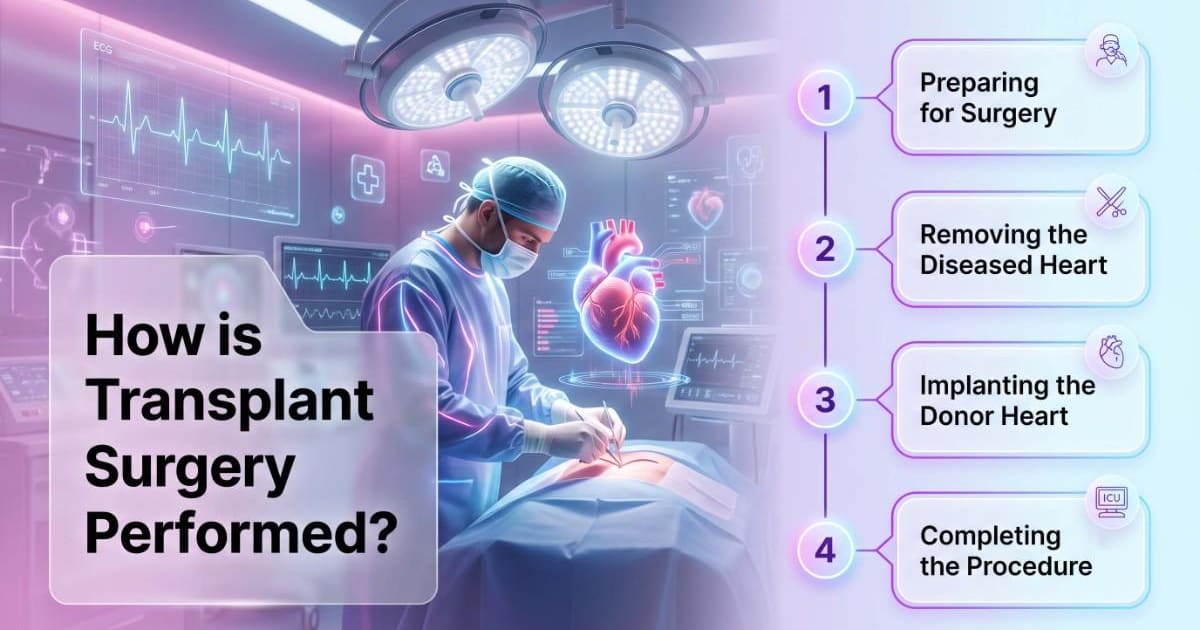
The surgery is done under general anaesthesia and typically takes anywhere from 4 to 10 hours. It generally happens in four stages.
1. Preparing for surgery
Once anaesthesia takes effect, the patient is connected to a heart-lung bypass machine. This machine takes over the job of the heart and lungs for the duration of the operation.
2. Removing the diseased heart
The surgeon opens the chest, and then heart transplantation is performed as an open-heart surgery, allowing surgeons to safely remove the diseased heart and implant the donor heart.
3. Implanting the donor heart
The donor heart is positioned and connected to the patient's blood vessels. Once blood begins flowing through it, the new heart starts to beat on its own. In some cases, a small electrical impulse is used to help it start.
4. Completing the procedure
After the surgical team confirms the new heart is functioning properly, the bypass machine is removed, the chest is closed, and the patient is moved to the ICU for close monitoring.
Recovery after a heart transplant
Recovery happens in stages, and it requires patience, discipline with medication, and a commitment to follow-up care.
Right after surgery: Patients stay in the ICU while doctors keep a close watch on heart function, blood pressure, and breathing, checking for any early signs of complications.
Hospital stay: Most patients remain in the hospital for one to three weeks, depending on how well they're healing.
The first three months: This period matters the most. Doctors run regular blood tests, imaging, and sometimes heart biopsies to catch any signs of rejection early. Immunosuppressant medicines start right away and need to be taken exactly as prescribed, without skipping doses.
Long-term recovery: Cardiac rehabilitation, a heart-healthy diet, regular exercise, and consistent follow-up visits all help patients ease back into daily life safely over the following months.
Risks and success rates
Like any major surgery, a heart transplant carries risks. That said, improvements in transplant care have made long-term outcomes considerably better than they once were.
Some of the possible complications include:
Rejection of the donor heart
Infections due to a weakened immune system
Bleeding or blood clots
Side effects from immunosuppressant medication
High blood pressure or kidney issues over time
Despite these risks, a large number of patients go on to live full, active lives for years after a successful transplant, provided they stick to their treatment plan and attend their check-ups without fail.
Heart transplant surgery cost in India
The cost of a heart transplant in India typically falls between ₹18 lakh and ₹35 lakh. This range depends on several factors: the hospital chosen, the surgeon's experience, how long the patient needs to stay in the ICU, the tests and investigations required, medication costs, donor availability, and the patient's overall health going into surgery.
It's worth planning for ongoing expenses too. Follow-up visits, regular diagnostic tests, and immunosuppressant medication are lifelong costs that come after the surgery itself.
Life after a heart transplant
A successful transplant marks the start of a new phase of care, not the end of treatment. With the right medical support, many patients return to work, travel, exercise, and generally enjoy a much better quality of life than before.
Doctors typically advise patients to:
Take all medicines exactly as prescribed
Never miss a follow-up appointment
Eat a heart-healthy diet
Exercise only under medical supervision
Avoid smoking, alcohol, and recreational drugs
Report any fever, infection, or unusual symptom right away
Staying consistent with follow-up care is what protects the new heart and catches problems before they turn serious.
Finding the right care
A heart transplant is a highly specialised procedure that should be performed at a hospital with experienced cardiac transplant specialists and comprehensive post-operative support. Choosing the right care team is just as important as the surgery itself.
When planning treatment, consider factors such as:
Experience of the cardiac transplant team
Availability of advanced cardiac care and ICU facilities
Access to multidisciplinary specialists
Rehabilitation and long-term follow-up support
Emergency care and patient support services
Finding the right hospital and specialist early can make the treatment journey more organised and ensure continuity of care before, during, and after the transplant.
Conclusion
A heart transplant offers hope to people living with advanced heart failure when other treatment options are no longer effective. While it is a complex procedure, advances in transplant surgery and post-operative care have significantly improved patient outcomes over the years.
Early evaluation, timely treatment, and consistent follow-up are essential for long-term success. If you or a loved one has been advised to consider a heart transplant, seeking guidance from experienced cardiac specialists and choosing a hospital equipped for advanced transplant care can help you make informed treatment decisions. Platforms like GetBeds can support your journey by helping you discover trusted hospitals, connect with experienced specialists, and access guidance throughout your treatment process.
Frequently Asked Questions
It's a procedure where a failing heart is replaced with a healthy donor heart, usually recommended once other treatments stop working.
People with end-stage heart failure, severe cardiomyopathy, certain congenital heart conditions, or other serious heart problems may need one.
The operation usually takes between 4 and 10 hours, depending on the patient's condition.
It's a major operation, but improvements in surgical technique, donor matching, and post-operative care have made outcomes considerably safer over time.
It generally ranges between ₹18 lakh and ₹35 lakh, depending on the hospital, the patient's condition, and the care required after surgery.
Disclaimer:
This blog is for informational purposes only and does not constitute scientific recommendations. Always consult a certified healthcare expert for analysis and remedies.