Share this Article
A baby's heart begins forming early during pregnancy. Sometimes, the wall separating the heart's lower chambers doesn't develop completely, leaving a small opening known as a ventricular septal defect (VSD). While hearing that your child has a "hole in the heart" can be frightening, not every VSD requires surgery. Some small defects close naturally as a child grows, while others need timely treatment to prevent complications.
Understanding VSD surgery, when it is needed, and the available treatment options can help parents and patients make informed decisions with their cardiologist. In this guide, we'll explain what effect is, how it is diagnosed, treatment options, recovery, and the VSD surgery cost in India.
What is a Ventricular Septal Defect (VSD)?
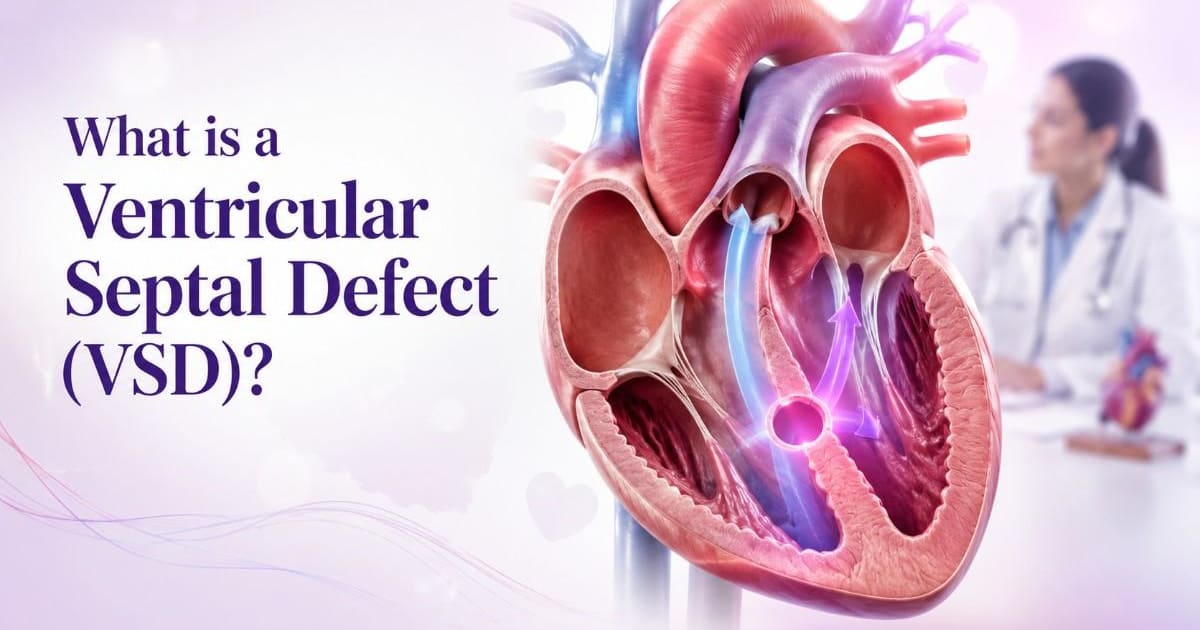
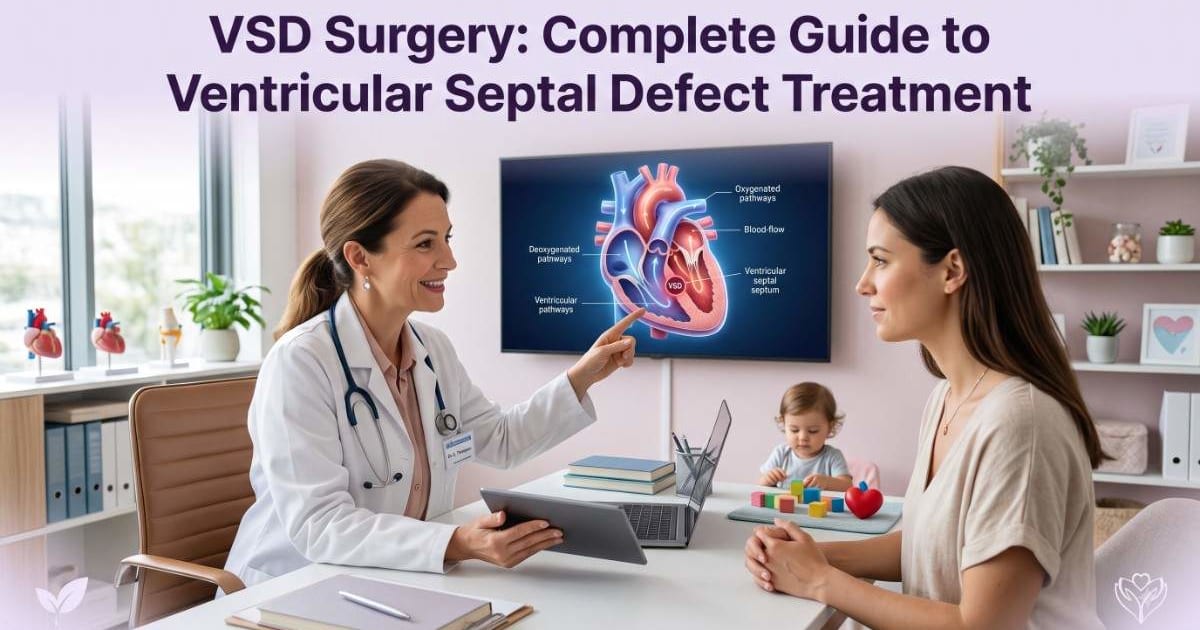
A ventricular septal defect (VSD) is a congenital heart defect in which there is a hole in the wall (septum) that separates the heart's two lower chambers, called the ventricles.
Normally, oxygen-rich blood stays on the left side of the heart while oxygen-poor blood stays on the right. In a VSD, blood flows through the opening from the left ventricle to the right ventricle. This extra blood flow makes the heart and lungs work harder than usual.
The condition can vary from a tiny opening that causes no symptoms to a large defect that requires early treatment.
Small VSD vs Large VSD
The size of the defect plays a major role in deciding treatment.
Small VSD
Often causes no symptoms
May close on its own during infancy or childhood
Usually requires regular follow-up with a pediatric cardiologist
Large VSD
Allows significant blood flow between the ventricles
Can cause poor weight gain, rapid breathing, feeding difficulties, or frequent lung infections in infants
Increases the risk of pulmonary hypertension in VSD if left untreated
Often requires surgery or device closure during infancy or early childhood
Treatment decisions are based on symptoms, the size and location of the defect, and its effect on heart function rather than the size alone.
How is VSD diagnosed?
Doctors may suspect a VSD after hearing a heart murmur during a routine examination. To confirm the diagnosis and understand the defect, one or more tests may be recommended, including:
Echocardiogram (the primary test used to diagnose VSD)
Chest X-ray
Pulse oximetry
Cardiac catheterization in selected cases
Cardiac MRI or CT scan when additional heart imaging is required
These tests help determine the size of the defect, blood flow through the heart, and whether treatment is necessary.
When is VSD surgery needed?
Not every child or adult with a VSD needs surgery.
Doctors may recommend a VSD heart surgery procedure or another closure technique if:
The defect is medium or large
The patient has symptoms such as breathlessness, poor feeding, or poor growth
The heart is becoming enlarged due to excess blood flow
There is increasing pressure in the lungs (pulmonary hypertension)
The defect affects nearby heart valves
Medications alone are not controlling symptoms
For babies with large VSDs, surgery is commonly performed within the first year of life to prevent long-term damage to the heart and lungs.
VSD surgery in newborns and infants
Many parents worry when surgery is recommended during infancy. However, early treatment is often the safest option for babies with large defects causing symptoms.
VSD surgery in newborns or young infants is performed by experienced pediatric cardiac surgeons. The goal is to close the hole before complications such as poor growth, repeated chest infections, or permanent lung damage develop.
With advances in pediatric cardiac surgery, most children recover well and go on to lead healthy, active lives.
Procedure of VSD Heart Surgery
The VSD heart surgery procedure depends on the size, location, and type of defect.
Open-heart surgery
Open-heart surgery is the most common treatment for medium and large VSDs.
During the procedure:
The child or patient is given general anesthesia.
The surgeon makes an incision in the chest to access the heart.
A heart-lung machine temporarily takes over blood circulation.
The hole is closed using stitches or a special surgical patch.
Once the repair is complete, the heart is restarted, and the incision is closed.
This procedure has been performed safely for many years and remains the preferred option for most complex VSDs.
VSD device closure
Not all VSDs require open-heart surgery. In selected cases, VSD device closure may be recommended.
This minimally invasive procedure involves guiding a thin catheter through a blood vessel, usually from the groin, to the heart. A specially designed closure device is then placed across the defect to seal the opening.
Compared to surgery, device closure generally involves:
No large chest incision
Shorter hospital stay
Faster recovery
However, it is only suitable for certain types of VSDs. A paediatric or adult cardiologist will determine whether a patient is a candidate for this procedure.
Recovery after VSD surgery
Recovery varies depending on the patient's age, overall health, and the type of procedure performed.
After open-heart surgery:
Most patients stay in the hospital for about a week.
Mild discomfort and tiredness are common during the first few weeks.
Heavy physical activity should be avoided until the doctor advises otherwise.
Regular follow-up appointments and echocardiograms help monitor healing.
Children usually recover remarkably well and gradually return to normal feeding, play, school, and daily activities.
Even after successful treatment, periodic follow-up with a cardiologist is recommended to ensure the heart continues to function normally.
VSD vs ASD: What's the difference?
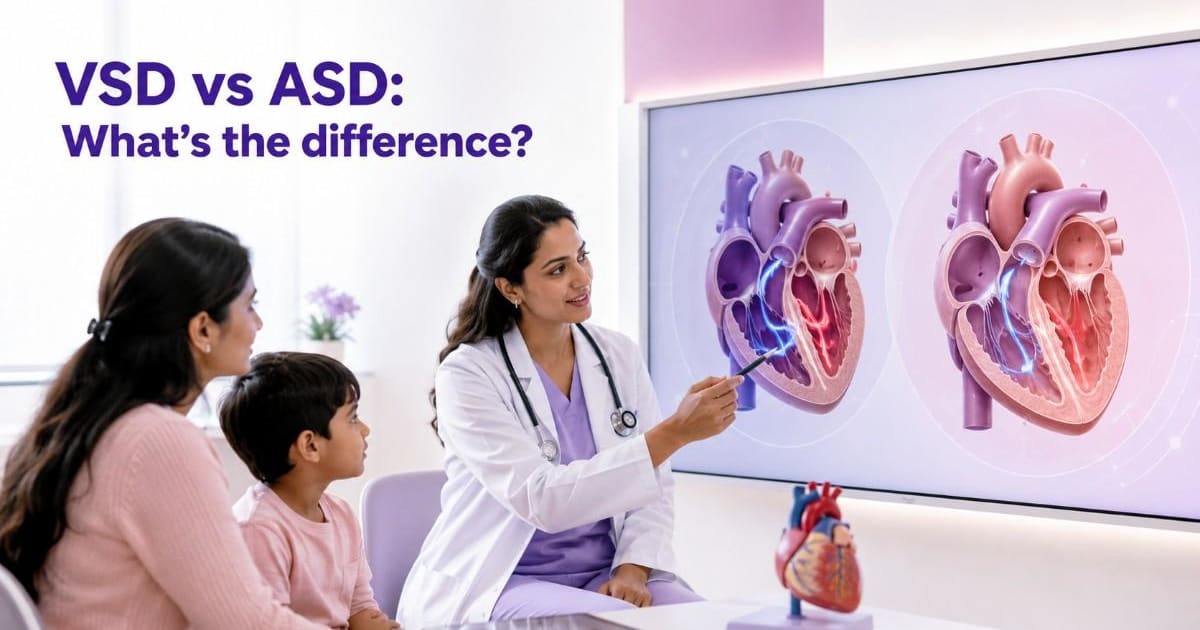
Both VSD and ASD are congenital heart defects, but they affect different parts of the heart.
VSD | ASD |
Hole between the lower chambers (ventricles) | Hole between the upper chambers (atria) |
Often causes symptoms earlier in infancy | May remain unnoticed until later in life |
Larger defects usually require early treatment | Some ASDs can also be closed using catheter-based procedures |
Although both conditions involve a hole in the heart, they differ in their location, symptoms, and treatment approach.
Success rate of VSD surgery
The VSD surgery success rate is very high when performed at experienced cardiac centres. Most children and adults recover well and go on to live healthy, active lives.
The outcome depends on several factors, including:
Size and location of the defect
Age at treatment
Presence of pulmonary hypertension or other heart conditions
Overall health of the patient
Early diagnosis and timely treatment significantly reduce the risk of long-term complications.
VSD surgery cost in India
The VSD surgery cost in India can vary depending on several factors, such as:
The hospital and city
The patient's age and medical condition
Whether open-heart surgery or device closure is performed
ICU stay, investigations, and post-operative care
Since every case is unique, it is best to consult a cardiac specialist for an individualized treatment plan and cost estimate.
If you're exploring treatment options, GetBeds helps you discover trusted hospitals, connect with experienced cardiac specialists, and understand your available treatment choices before making a decision.
Conclusion
A diagnosis of a ventricular septal defect can feel overwhelming, especially for new parents. However, not every VSD requires surgery. Many small defects close naturally, while larger ones can be successfully treated with timely intervention.
Whether the recommended treatment is observation, VSD device closure, or VSD surgery, early evaluation by an experienced cardiologist is essential to achieve the best possible outcome. With advances in paediatric and adult cardiac care, most patients recover well and enjoy a healthy quality of life after treatment.
If you or your child has been advised to undergo VSD surgery, GetBeds can help you discover trusted hospitals, connect with experienced cardiac specialists, and make informed treatment decisions with confidence.
Frequently Asked Questions
A ventricular septal defect (VSD) is a congenital heart condition in which there is a hole in the wall separating the heart's two lower chambers, allowing blood to flow abnormally between them.
Yes. Many small VSDs close naturally during infancy or early childhood and may only require regular monitoring by a cardiologist.
Open-heart surgery closes the defect using stitches or a patch through a chest incision, while VSD device closure is a minimally invasive catheter-based procedure suitable for selected patients.
Surgery is generally recommended when the defect is medium or large, causes symptoms, affects growth, increases pressure in the lungs, or places extra strain on the heart.
VSD surgery has a high success rate, and most patients recover well with excellent long-term outcomes when treated at experienced cardiac centres.
The cost depends on factors such as the type of procedure, hospital, city, patient's condition, and post-operative care. A consultation with a cardiac specialist can provide a more accurate estimate.
Disclaimer:
This blog is for informational purposes only and does not constitute scientific recommendations. Always consult a certified healthcare expert for analysis and remedies.