Share this Article
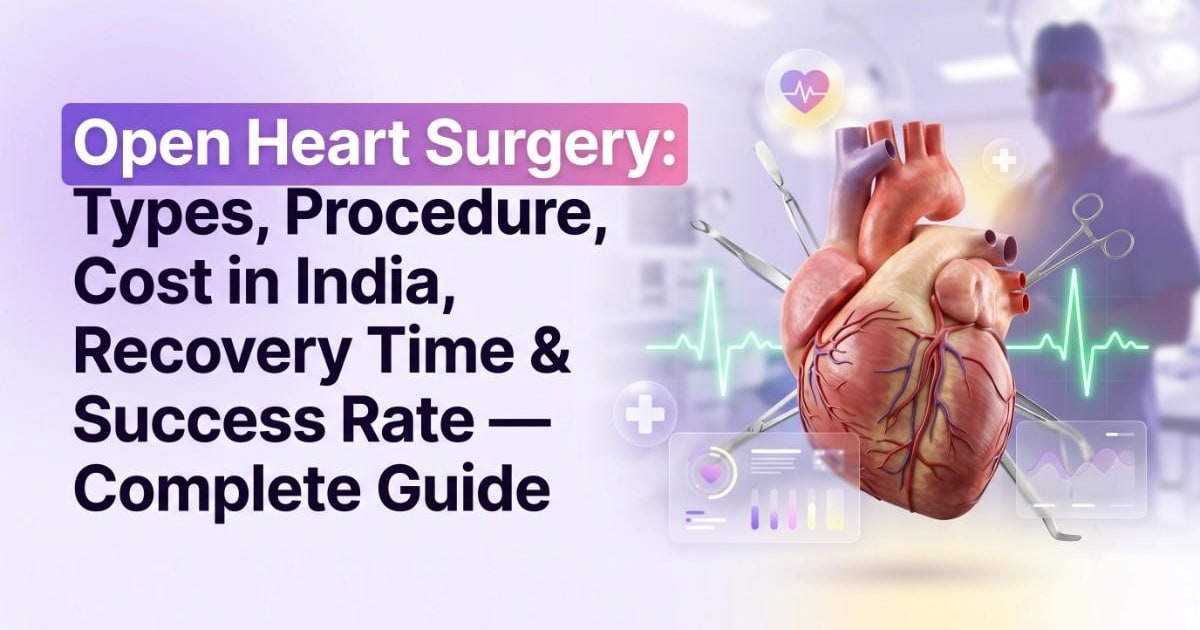
Hearing the phrase “open‑heart surgery” can feel intimidating, but for millions of people it is a life‑saving option that restores heart function and dramatically improves quality of life. Modern advances in cardiac surgery have made open-heart procedures safer and more effective than ever before.
When medicines or minimally invasive techniques no longer control a serious heart problem, open‑heart surgery is often recommended. Whether the issue is a blocked artery, a damaged valve, or a congenital defect, timely surgery can prevent life‑threatening complications. This guide walks you through everything you need to know—why the surgery is needed, how it’s performed, what recovery looks like, the risks involved, the cost in India, and answers to common questions.
What Is Open‑Heart Surgery?

Open‑heart surgery is a major cardiac operation in which a surgeon opens the chest to reach the heart and treat conditions that affect the heart muscle, valves, arteries, or surrounding structures. In many cases, a heart‑lung machine temporarily takes over the work of breathing and circulation, allowing the surgeon to operate safely on a still heart.
Even though the term "open heart" sounds dramatic, modern techniques have made these procedures highly successful. When performed at experienced cardiac centres, the outcomes are excellent.
When Is Open‑Heart Surgery Needed?
Doctors may suggest surgery for a variety of serious heart conditions, including:
Severe coronary artery disease that requires bypass surgery (CABG)
Heart valve disease that needs repair or replacement
Congenital heart defects present at birth
Aortic aneurysms or dissections
Advanced heart failure that may require mechanical support or transplantation
Complex rhythm disorders that cannot be managed with medication alone
Depending on the affected heart valve, treatment may involve aortic valve replacement or mitral valve replacement to restore normal heart function.
Common Types of Open‑Heart Surgery
Procedure | Primary Purpose |
CABG (Coronary Artery Bypass Grafting) | Restores blood flow around blocked coronary arteries |
Valve Repair/Replacement | Fixes damaged or leaking heart valves |
Aortic Surgery | Repairs aneurysms or diseased sections of the aorta |
Congenital Heart Surgery | Corrects birth‑defects affecting the heart |
Heart Transplant | Replaces a severely damaged heart with a donor organ |
How Is the Procedure Performed?
Pre‑operative evaluation – Blood tests, imaging, and other investigations are done to plan the surgery.
Anesthesia – General anesthesia is administered so the patient feels no pain.
Incision – The surgeon makes an incision through the breastbone (sternum) to access the heart.
Support – A heart‑lung machine keeps oxygenated blood flowing while the heart is stopped.
Surgery – Depending on the condition, the surgeon may bypass blocked arteries, repair or replace valves, or correct structural defects.
Closure – Once the repair is complete, the heart is restarted, the chest is closed, and the patient is taken to the intensive care unit (ICU) for close monitoring.
Most open‑heart operations last between three and six hours.
Recovery Timeline
After open-heart surgery, the first one to two days usually involve ICU monitoring. By days 3–7, patients start walking, eat normally, and prepare for discharge. During weeks 2–6, activity gradually increases as healing continues. By weeks 6–12, most patients begin cardiac rehabilitation and return to their daily routine. Full recovery can take up to three months, depending on the type of surgery and the patient’s overall health.
Benefits
Relieves symptoms such as chest pain and shortness of breath
Improves blood flow and heart function
Reduces the risk of future heart attacks in eligible patients
Enhances overall quality of life and long‑term survival
Possible Risks
Like any major surgery, open‑heart procedures carry some risk. Potential complications include the following:
Bleeding or infection
Irregular heart rhythms (arrhythmias)
Stroke or transient ischemic attacks
Kidney problems
Blood clots
Adverse reactions to anesthesia
Some patients may also develop persistent heart rhythm problems after surgery that require pacemaker surgery to maintain a regular heartbeat. The likelihood of these complications varies with age, overall health, and the specific type of surgery. Your cardiac team will carefully assess your personal risk profile before recommending the operation.
Open‑Heart Surgery Cost in India
Costs differ widely based on the procedure, city, hospital reputation, surgeon’s expertise, ICU stay, implants, and the patient’s overall condition. Below is a rough estimate for common surgeries:
Procedure | Approximate Cost (₹) |
CABG | 1.8 – 5 lakh |
Valve Surgery | 2.5 – 6 lakh |
Complex Aortic Surgery | 4 – 8 lakh+ |
Heart Transplant | Varies significantly (often much higher) |
Keep in mind that actual expenses can shift depending on hospital policies, pre‑ and post‑operative investigations, length of ICU stay, and any additional treatments required.
Life After Open‑Heart Surgery
After recovery, most people gradually return to their normal routines. To support long‑term heart health, it’s essential to:
Take prescribed medications regularly
Follow a heart‑healthy diet low in sodium and saturated fats
Exercise under medical supervision (usually after a cardiac rehab program)
Quit smoking and limit alcohol consumption
Manage diabetes, high blood pressure, and cholesterol levels
Attend routine follow‑up appointments with your cardiologist
Patients who progress to end-stage heart failure despite treatment may undergo an evaluation for transplantation, where heart transplant eligibility is carefully assessed before the procedure is considered.
How Can GetBeds Help?
Choosing the right hospital and surgical team is a critical step in your treatment journey. GetBeds assists patients by:
Comparing reputable cardiac centres across the country
Connecting you with experienced heart surgeons
Explaining treatment packages and financing options
Guiding you through every stage—from initial consultation to postoperative recovery
Our goal is to make healthcare decisions clearer, more transparent, and less stressful.
Conclusion
Open-heart surgery remains one of the most effective treatments for serious heart disease. With timely diagnosis, an experienced surgical team, and proper post-operative care, many patients go on to enjoy healthy, active lives. For patients with advanced heart failure where other procedures are no longer effective, heart transplant surgery may be recommended as the next step in treatment.
If your doctor has recommended surgery, understanding the procedure and selecting the right cardiac centre can give you confidence and peace of mind as you move forward. GetBeds can help you connect with trusted hospitals and experienced cardiac specialists to make informed decisions about your treatment.
Frequently Asked Questions
It is a procedure where surgeons open the chest to treat serious heart conditions such as blocked arteries, valve disease, or congenital heart defects.
Most patients feel back to normal activities within 6–12 weeks, although complete recovery may take a few months depending on the surgery type and personal health.
Advances in surgical techniques and critical‑care medicine have greatly improved safety and success rates. Your medical team will discuss your individual risk factors.
Costs generally range from about ₹1.8 lakh to ₹6 lakh or more, depending on the specific procedure and hospital.
Yes, with proper rehabilitation, medication adherence, and regular follow‑up, many patients return to work and everyday activities.
Disclaimer:
This blog is intended for informational purposes only and does not constitute medical advice. Always consult a qualified healthcare professional for diagnosis and treatment.