Share this Article
Does every patient with heart failure qualify for a heart transplant? Not really, and that surprises a lot of people. A heart transplant is a life-saving option, but it's reserved for a specific group of patients whose heart has stopped responding to every other treatment available.
Heart transplant eligibility depends on several factors working together: how severe the heart condition is, the patient's overall health, age, lifestyle, and whether they can commit to lifelong care after surgery. Doctors look at all of this closely before recommending someone for a transplant, because the decision affects not just the patient's chances of survival but also how limited donor hearts get allocated.
This guide from getbeds.in breaks down who typically qualifies for a heart transplant, which conditions rule someone out, how the evaluation process works, and where patients get assessed and added to the waiting list.
Who needs a heart transplant?

A heart transplant is usually considered only after other treatments, medications, surgeries, or implanted devices have failed to improve the patient's condition. Doctors call this end-stage heart failure, a stage where the heart can no longer pump enough blood to meet the body's needs, even with maximum treatment.
Some of the conditions that commonly lead to a transplant recommendation include:
Severe heart failure caused by weakened heart muscle
Cardiomyopathy, where the heart muscle itself becomes diseased and enlarged
Certain congenital heart defects present from birth
Dangerous, uncontrollable heart rhythm problems
A previous heart surgery or transplant that hasn't held up
Patients at this stage often struggle with breathlessness, extreme fatigue, and swelling, even during simple daily tasks. When these symptoms don't improve despite treatment, and life expectancy without a new heart looks short, a transplant becomes the option doctors turn to.
Heart transplant criteria and requirements
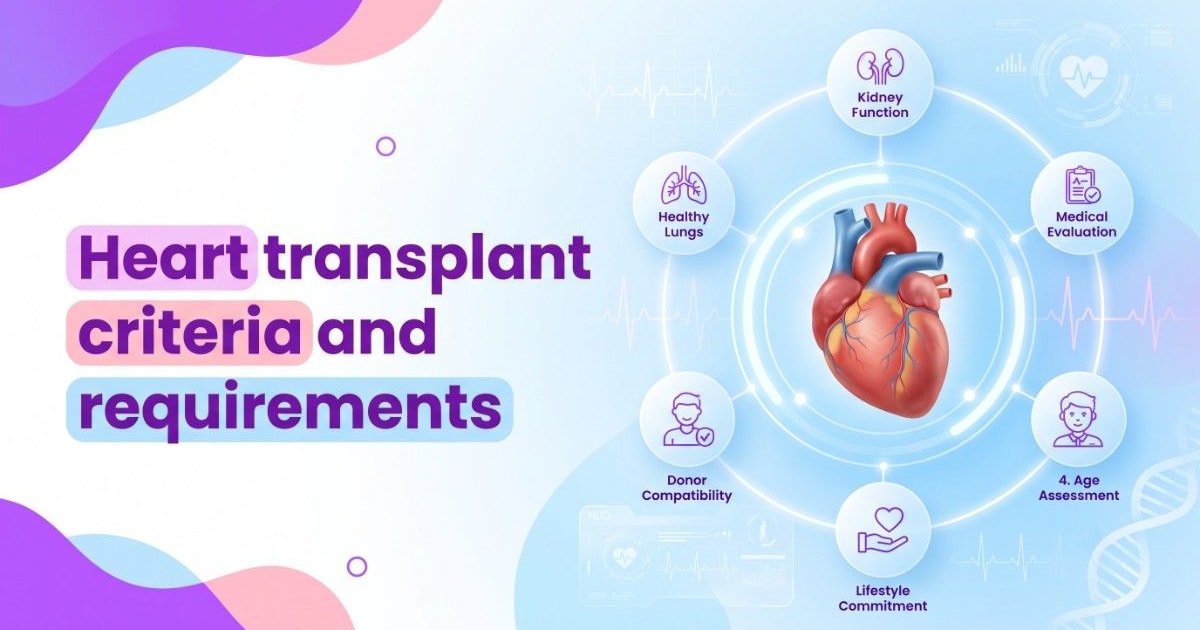
There isn't a single test that determines whether someone qualifies for a heart transplant. Instead, doctors evaluate several medical, physical, and lifestyle factors to decide if the surgery is likely to improve the patient's health and whether they can safely undergo the procedure.
How well is the heart functioning?
One of the most important factors is how effectively the heart pumps blood. Doctors measure this using the ejection fraction (EF), which indicates the percentage of blood pumped out of the heart with each heartbeat. If the ejection fraction remains significantly below normal despite medications and other treatments, a heart transplant may become the best treatment option.
Overall physical health
A heart transplant is a complex procedure, so patients must be healthy enough to tolerate surgery and recover successfully. Doctors carefully assess the kidneys, liver, lungs, and other vital organs, as serious problems in these areas can increase surgical risks and affect long-term recovery.
Lifestyle and long-term commitment
Successful recovery depends on more than just the operation. Patients must be willing to take immunosuppressant medications for life, attend regular follow-up appointments, and adopt healthy lifestyle habits. Most transplant centres also require patients to stop smoking, avoid alcohol misuse, and stay away from recreational drugs before they can be considered for surgery.
Emotional and psychological readiness
A heart transplant brings lifelong physical and emotional challenges. For this reason, many hospitals include a psychological evaluation as part of the eligibility process. This helps ensure that patients understand the commitment involved, can manage the emotional demands of recovery, and have a reliable support system to assist them after the transplant.
Age limit for heart transplant
There isn't a fixed cutoff age that automatically disqualifies someone. Most patients who receive a heart transplant are under 65, but age on its own isn't the deciding factor, it's how fit and healthy the person is for their age. A relatively younger patient with several other health problems might actually face more risk than an older patient who is otherwise in good shape. Doctors look at overall physical condition rather than the number on a birth certificate.
Conditions that qualify for heart transplant
Broadly speaking, patients are considered good candidates when they have advanced, irreversible heart failure that hasn't responded to medication, other surgeries, or implanted devices, and when tests confirm the heart's pumping ability has dropped significantly. Beyond that, doctors also want to see that no other major health condition would make the surgery too risky or shorten the patient's life regardless of a new heart.
Conditions that disqualify a patient
Even with severe heart failure, certain conditions can rule out a transplant because they raise the risk of serious complications or reduce the chances of a good outcome. These include:
An active infection that hasn't been brought under control yet
A recent or ongoing history of cancer
Severe, longstanding high blood pressure in the lungs, which can put the new heart under dangerous strain
Serious, irreversible damage to other organs like the kidneys or liver
An unwillingness or inability to follow the lifestyle and medication requirements after surgery
Doctors weigh these carefully, since some conditions may improve with treatment, which can make a patient eligible again later.
Heart transplant evaluation process
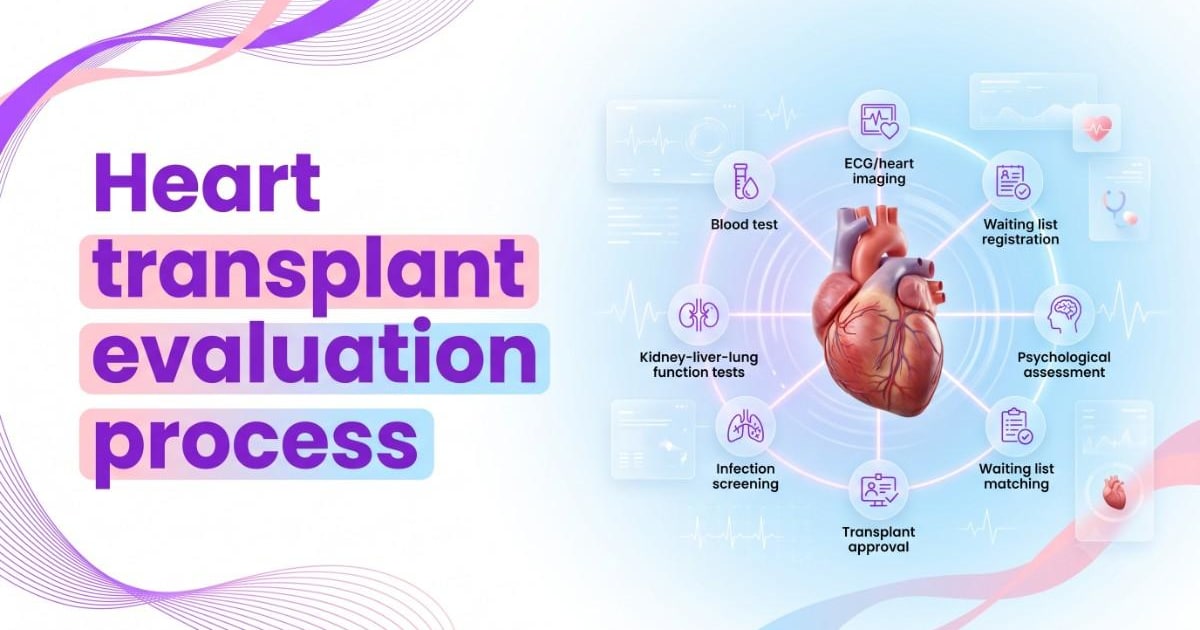
Once a doctor suspects a patient might need a transplant, they're referred for a full evaluation, usually involving blood tests, heart imaging, and function tests for the kidneys, liver, and lungs. Doctors also screen for infections and certain cancers, and carry out a psychological assessment to check the patient's readiness.
If the evaluation confirms eligibility, the patient's details are registered with the relevant transplant authority and added to the regional waiting list. In India, this process is governed by the National Organ and Tissue Transplant Organisation, which oversees fair allocation of donor hearts based on urgency, blood type, and compatibility. Patients on the list are monitored regularly while they wait, and treatment plans are adjusted if their condition changes.
You can use getbeds.in to compare hospitals with dedicated heart transplant programmes and get a clearer picture of the evaluation process before you begin.
Conclusion
Heart transplant eligibility isn't about ticking one box, it's about a complete picture of the patient's heart condition, overall health, and readiness for lifelong care. Not everyone with heart failure will qualify, and that's precisely why the evaluation process is so thorough. If you or someone in your family has been advised to consider a transplant, understanding these criteria can help you ask the right questions and prepare for what comes next. Comparing experienced hospitals through getbeds.in is a good place to start that conversation.
Frequently asked questions
Q: Who is a good candidate for a heart transplant?
Someone with advanced, irreversible heart failure that hasn't improved with medication or other treatment, who is otherwise healthy enough to withstand major surgery and committed to lifelong follow-up care.
Q: What is the age limit for a heart transplant?
There's no strict upper age limit. Most recipients are under 65, but overall health and fitness matter more than age alone.
Q: What conditions require a heart transplant?
Severe heart failure, advanced cardiomyopathy, certain congenital heart defects, and dangerous rhythm problems are among the most common reasons.
Q: Who cannot get a heart transplant?
Patients with active infections, a recent history of cancer, severe lung-related high blood pressure, or serious irreversible damage to other organs are usually not considered suitable candidates.
Q: How is heart transplant eligibility evaluated?
Through a series of blood tests, heart imaging, organ function tests, infection and cancer screening, and a psychological assessment, all reviewed together by a transplant team.
Q: Can diabetic patients get a heart transplant?
Yes, in many cases. Diabetes on its own doesn't rule out a transplant, but it needs to be well controlled, since poorly managed diabetes can affect recovery and increase surgical risk.