
Share this Article
Did you know that a damaged mitral valve can force your heart to work harder with every single heartbeat, eventually leading to fatigue, breathlessness, irregular heart rhythms, and even heart failure if left untreated?
The mitral valve plays a critical role in maintaining smooth blood flow through the heart. When this valve becomes severely narrowed (mitral stenosis) or starts leaking significantly (mitral valve regurgitation), the heart's ability to pump blood efficiently can be affected. While many cases can be managed with medications or valve repair, some patients eventually require mitral valve replacement to restore normal heart function and prevent serious complications.
Today, advances in cardiac care have made mitral valve replacement safer and more effective than ever before. From traditional open-heart surgery to minimally invasive and transcatheter approaches, patients now have access to multiple treatment options tailored to their individual needs.
In this complete guide, we'll explain everything you need to know about mitral valve replacement surgery, including when it is needed, available surgical approaches, recovery, risks, valve choices, cost, and life expectancy after treatment. If you're exploring treatment options, GetBeds can help you connect with trusted hospitals and experienced cardiac specialists for informed healthcare decisions.
What is Mitral Valve Replacement?
Mitral Valve Replacement is a surgical procedure in which a diseased mitral valve is removed and replaced with a prosthetic heart valve. The mitral valve is located between the left atrium and left ventricle and ensures that blood flows forward through the heart without leaking backward. When the valve becomes severely damaged and can no longer function properly, replacement may be necessary to restore normal blood circulation and reduce strain on the heart.
Mitral valve disease usually occurs due to two major conditions:
Mitral Valve Regurgitation, where the valve leaks and allows blood to flow backward
Mitral Stenosis, where the valve becomes narrowed and restricts blood flow
While repair is often preferred whenever possible, replacement becomes necessary when the valve damage is too severe for repair techniques to provide lasting results. Likewise, patients whose disease affects the aortic valve instead of the mitral valve may require aortic valve replacement to restore normal blood flow from the heart
Why might someone need MVR Surgery?
The mitral valve works continuously with every heartbeat. When it fails to open or close properly, blood circulation becomes less efficient, forcing the heart to work harder. Many patients initially experience mild symptoms that gradually worsen over time. Common signs may include:
Shortness of breath
Fatigue and weakness
Chest discomfort
Heart palpitations
Swelling in the feet or ankles
Dizziness
Reduced exercise tolerance
Without proper treatment, severe mitral valve disease can increase the risk of heart failure, irregular heart rhythms, stroke, and other serious complications.
Mitral Valve Repair vs Replacement
One of the most common questions patients ask is whether repair or replacement is the better option.
Mitral Valve Repair involves preserving and reconstructing the patient's natural valve. Whenever possible, surgeons generally prefer repair because it maintains the original valve structure and often provides excellent long-term outcomes. However, repair is not always feasible.
Mitral Valve Replacement is recommended when:
The valve is severely damaged
Extensive calcification is present
Previous repairs have failed
Severe Mitral Stenosis exists
Structural abnormalities cannot be corrected effectively
The final decision depends on the severity of disease, valve anatomy, patient age, and overall health condition.
Types of replacement valves
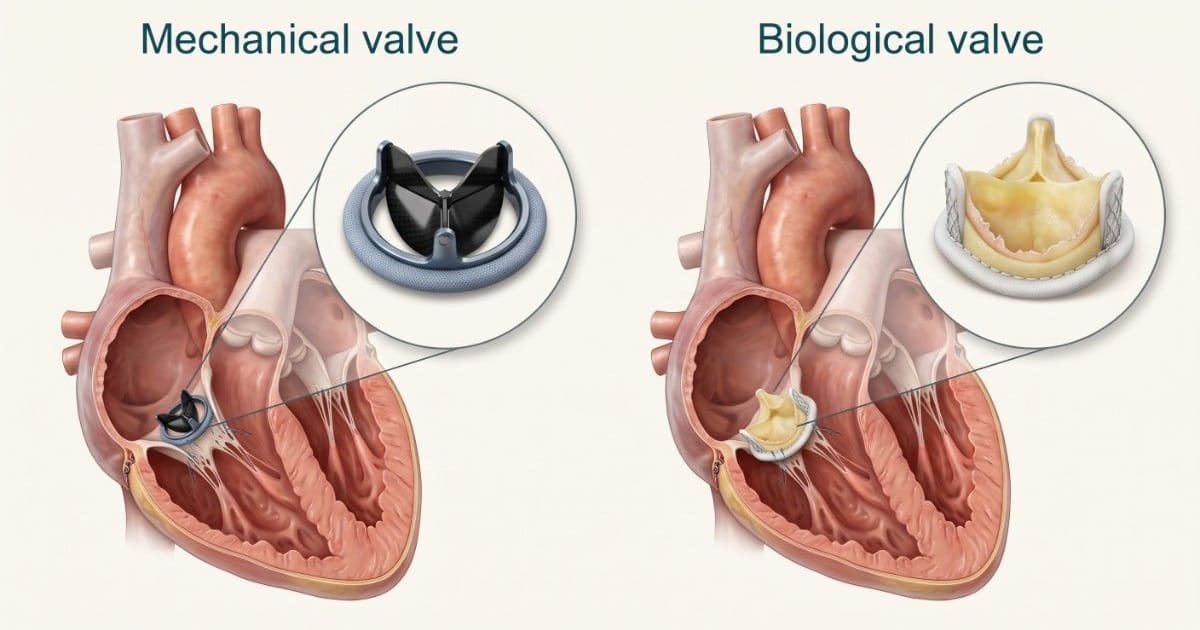
One of the most important decisions during Mitral Valve Replacement Surgery is selecting the type of replacement valve.
1. Mechanical valve replacement

Mechanical valves are made from highly durable materials such as carbon, titanium, or metal alloys. Their primary advantage is longevity. In many cases, they can last a lifetime without needing replacement.
Benefits include:
Excellent durability
Long-term performance
Lower risk of future valve replacement
However, patients typically require lifelong anticoagulation after valve replacement to prevent blood clots from forming on the valve.
2. Tissue valve replacement

Biological or tissue valves are created using animal tissue or donated human tissue. Advantages include:
Most patients do not require lifelong blood thinning.
More natural blood flow
Lower clotting risk
However, tissue valves generally last between 10 and 15 years and may eventually need replacement.
When comparing mechanical vs. tissue valve replacement, the best choice depends on age, lifestyle, medical history, and personal preferences.
Surgical approaches for mitral valve replacement
Modern cardiac surgery offers several approaches for valve replacement. The most suitable option depends on patient anatomy, overall health, and surgical expertise.
Traditional open heart surgery
This remains the most commonly performed method.
During open heart surgery, the surgeon creates an incision through the breastbone to access the heart directly. The damaged valve is removed and replaced with a prosthetic valve.
This approach offers excellent visibility and remains the gold standard for many complex cases.
Minimally Invasive Mitral Valve Replacement
In selected patients, surgeons can access the heart through a smaller incision between the ribs rather than opening the entire chest.
Benefits may include:
Smaller scars
Reduced pain
Shorter hospital stay
Faster recovery
Transcatheter Mitral Valve Replacement (TMVR)
TMVR is an emerging minimally invasive option that allows doctors to place a new valve through a catheter inserted via a blood vessel.
This technique is generally reserved for patients who may be considered high-risk candidates for traditional surgery.
What happens during mitral valve replacement surgery?
Although techniques vary, most procedures follow a similar process.
The surgery generally includes:
Administration of general anesthesia
Connection to a heart-lung bypass machine
Access to the mitral valve
Removal of the damaged valve
Placement of the prosthetic heart valve
Testing valve function
Restarting the heart
Closing the surgical incision
Most MVR surgery procedures take approximately two to four hours depending on complexity. Patients undergoing bypass surgery (CABG) also follow a similar surgical pathway, including general anesthesia and temporary support from a heart-lung machine during the procedure
Recovery after Mitral Valve Replacement
Recovery is a gradual process that requires patience and adherence to medical guidance.
Immediately after surgery, patients are typically monitored in the intensive care unit before being transferred to a regular hospital room. Most recovery timelines follow this pattern:
First week
Patients remain under observation while doctors monitor heart function, incision healing, and overall recovery.
Weeks 1 to 6
Patients continue recovering at home while avoiding heavy lifting and strenuous activities. Walking and light movement are usually encouraged.
Weeks 6 to 12
Many patients begin structured cardiac rehabilitation programs designed to improve strength, stamina, and cardiovascular health.
Full recovery varies from one patient to another, but most individuals gradually return to normal daily activities within a few months.
Risks and complications
Like any major heart procedure, mitral valve replacement surgery carries certain risks.
Potential complications may include:
Bleeding
Infection
Blood clots
Stroke
Irregular heart rhythms
Valve dysfunction
Need for future valve replacement
In some patients, persistent rhythm disturbances after surgery may require pacemaker surgery to help maintain a stable heartbeat. Fortunately, advances in cardiac surgery, improved imaging, and better post-operative care have significantly improved safety and outcomes.
Life expectancy after mitral valve replacement
Many patients are concerned about life expectancy after mitral valve replacement.
The encouraging news is that successful surgery can significantly improve both quality of life and long-term survival.
Factors influencing long-term outcomes include:
Patient age
Overall heart function
Type of replacement valve
Presence of other medical conditions
Adherence to medications and follow-up care
Many patients enjoy active, productive lives for years or even decades after successful treatment. Regular monitoring and healthy lifestyle habits play an important role in maintaining long-term valve performance.
In advanced cases where heart function continues to decline despite treatment, some patients may eventually be considered for heart transplant surgery.
Mitral Valve Replacement Cost in India
The mitral valve replacement cost in India varies depending on several factors, including:
Type of hospital
City and location
Surgeon's expertise
Type of replacement valve
Surgical approach used
In general, the cost of treatment may range from approximately ₹3,00,000 to ₹8,00,000 or more, depending on the complexity of the procedure and hospital facilities. Compared to many international destinations, India continues to offer advanced cardiac care at relatively affordable costs while maintaining high clinical standards.
Living with a prosthetic heart valve
After surgery, patients are encouraged to adopt heart-healthy habits to protect their new valve and overall cardiovascular health.
Important recommendations often include:
Taking medications exactly as prescribed
Attending regular follow-up appointments
Following dietary guidance
Participating in cardiac rehabilitation
Maintaining healthy blood pressure
Staying physically active within medical recommendations
Patients with advanced heart failure who are being considered for transplantation must first meet the recommended heart transplant eligibility criteria before moving forward with treatment.
Conclusion
Mitral valve replacement is a highly effective treatment for severe mitral valve disease when repair is no longer possible. Whether caused by Mitral Valve Regurgitation, Mitral Stenosis, or other structural valve problems, replacement surgery can restore healthy blood flow, improve symptoms, and significantly enhance quality of life.
Modern treatment options, including traditional Open Heart Surgery, minimally invasive procedures, and emerging transcatheter techniques, provide patients with more choices than ever before. Understanding the differences between Mitral Valve Repair vs Replacement, choosing the right valve type, and following proper recovery guidance can help patients achieve the best possible outcomes.
With timely treatment and ongoing medical care, many individuals enjoy excellent long-term health and improved life expectancy after mitral valve replacement surgery.
Frequently Asked Questions
Mitral valve replacement surgery is a procedure in which a damaged mitral valve is removed and replaced with a mechanical or biological prosthetic valve to restore normal blood flow through the heart.
Repair preserves the patient's natural valve, while replacement involves removing the damaged valve and inserting a prosthetic heart valve. Repair is generally preferred when feasible.
Mechanical valves last longer but require lifelong blood-thinning medication. Tissue valves typically do not require lifelong anticoagulation but may need replacement after several years.
Most patients require several weeks for initial recovery, while full recovery may take two to three months depending on the surgical approach and overall health.
Many patients experience significant improvements in survival and quality of life after successful surgery, particularly when they follow medical advice and maintain regular follow-up care.
Disclaimer:
This blog is intended for informational purposes only and does not constitute medical advice. Always consult a qualified healthcare professional for diagnosis and treatment.