Share this Article
Being told that you need thoracotomy surgery can sound intimidating. Why does the chest need to be opened? Is thoracotomy always necessary? How is it different from VATS, and how painful is recovery?
Thoracotomy is an open chest surgery used to give a surgeon direct access to organs and structures inside the chest. It may be performed for certain lung conditions, cancers, chest injuries and other problems involving the lungs, oesophagus, diaphragm or structures within the thoracic cavity.
Because thoracotomy is a major surgical approach, understanding the procedure, reasons for surgery, recovery, possible complications and alternatives can help patients prepare for a discussion with their specialist.
What is thoracotomy surgery?
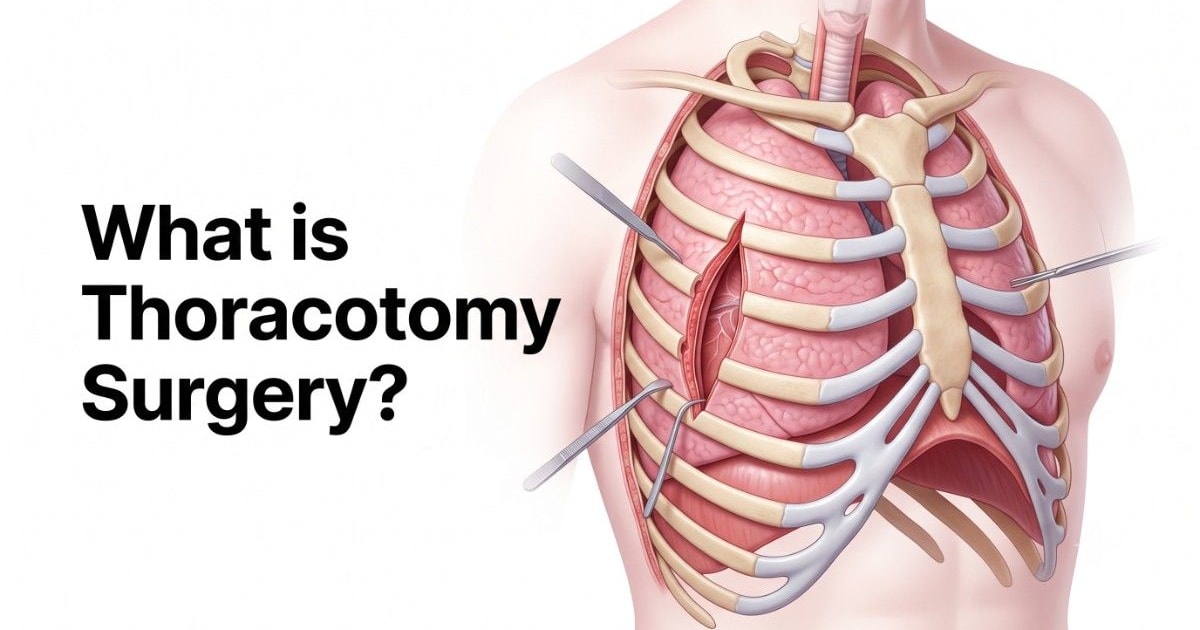
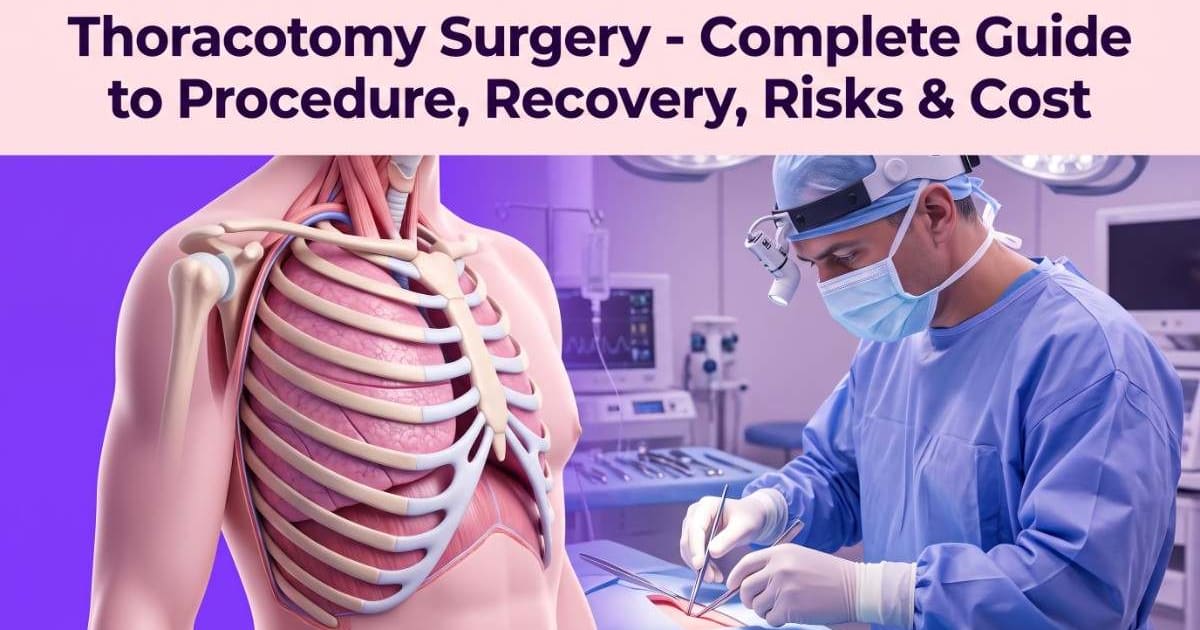
Thoracotomy is an open chest lung surgery in which the surgeon makes an incision between the ribs to reach structures inside the chest.
The exact location and size of the incision depend on the condition being treated and the part of the chest that needs to be accessed. In some cases, a small portion of a rib may also need to be removed temporarily to provide adequate access.
Thoracotomy can provide the surgeon with direct access to the lungs and other structures in the chest when an open approach is considered necessary.
When is thoracotomy necessary?
Thoracotomy may be recommended for different medical conditions and surgical procedures. Some possible reasons include:
Certain lung cancers
Serious chest injuries
Problems involving the oesophagus
Some conditions affecting the diaphragm
Certain collapsed-lung or pleural conditions
Removal of abnormal tissue
Complex chest procedures where an open approach provides better access
The decision depends on the disease, its location, the planned treatment and the patient's overall health.
Types of Thoracotomy
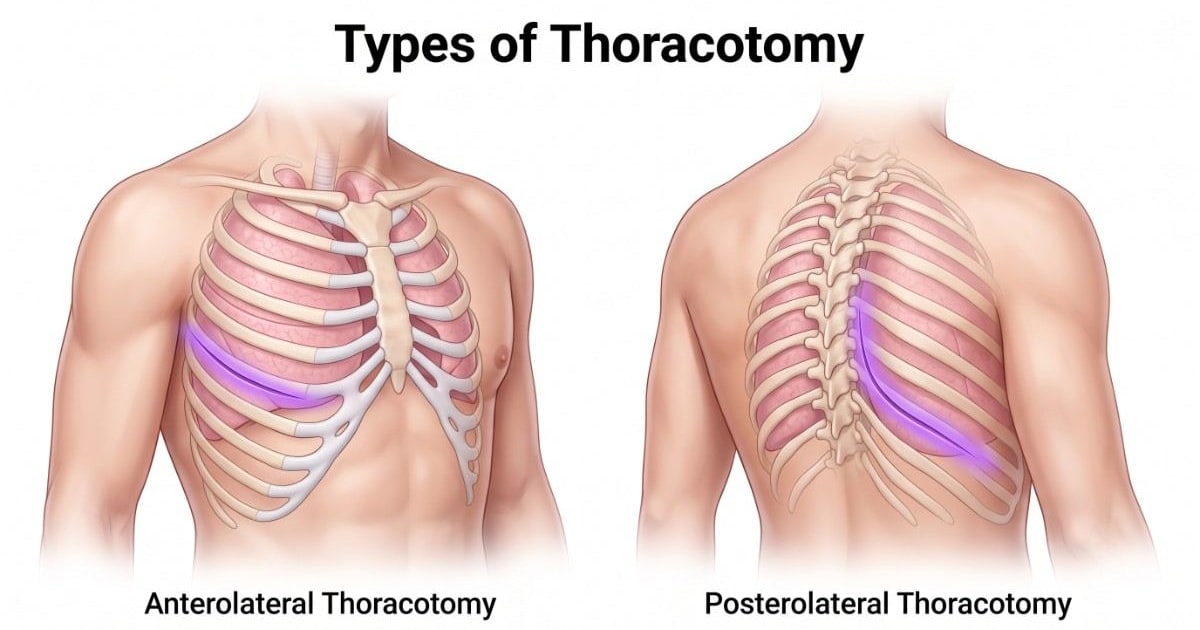
Thoracotomy can be described according to the location of the chest incision.
1. Anterolateral Thoracotomy
An anterolateral thoracotomy involves an incision toward the front and side of the chest. It may be used when access to particular structures in the chest is required.
2. Posterolateral Thoracotomy
A posterolateral thoracotomy involves an incision toward the back and side of the chest. This approach may provide access to parts of the lungs and other structures located deeper within the chest.
The exact approach is selected by the surgical team according to the procedure being performed.
Procedure of thoracotomy
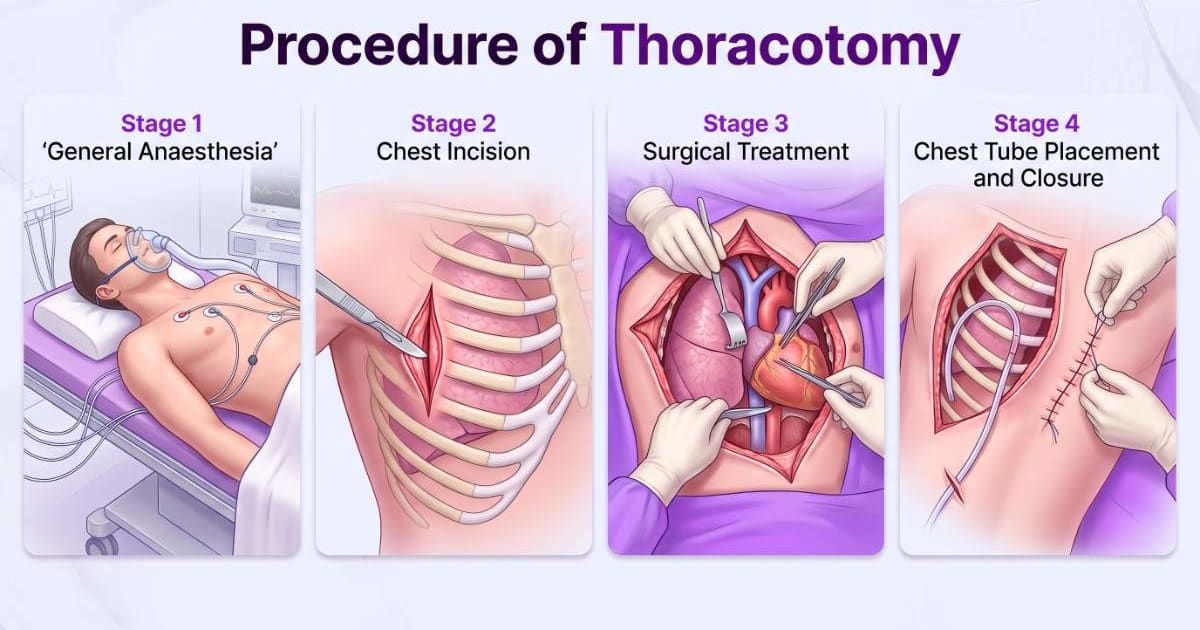
Thoracotomy is performed under general anaesthesia, so the patient is asleep during surgery.
After anaesthesia is administered, the surgeon makes an incision between the ribs to access the chest cavity. Depending on the condition, the surgeon may remove, repair or treat the affected tissue or organ.
A chest tube may be placed before the incision is closed. This helps drain fluid or air from the chest after surgery and supports proper lung expansion during recovery.
The exact steps vary significantly depending on whether thoracotomy is being used for lung cancer surgery, trauma, pleural disease or another condition.
Thoracotomy vs VATS
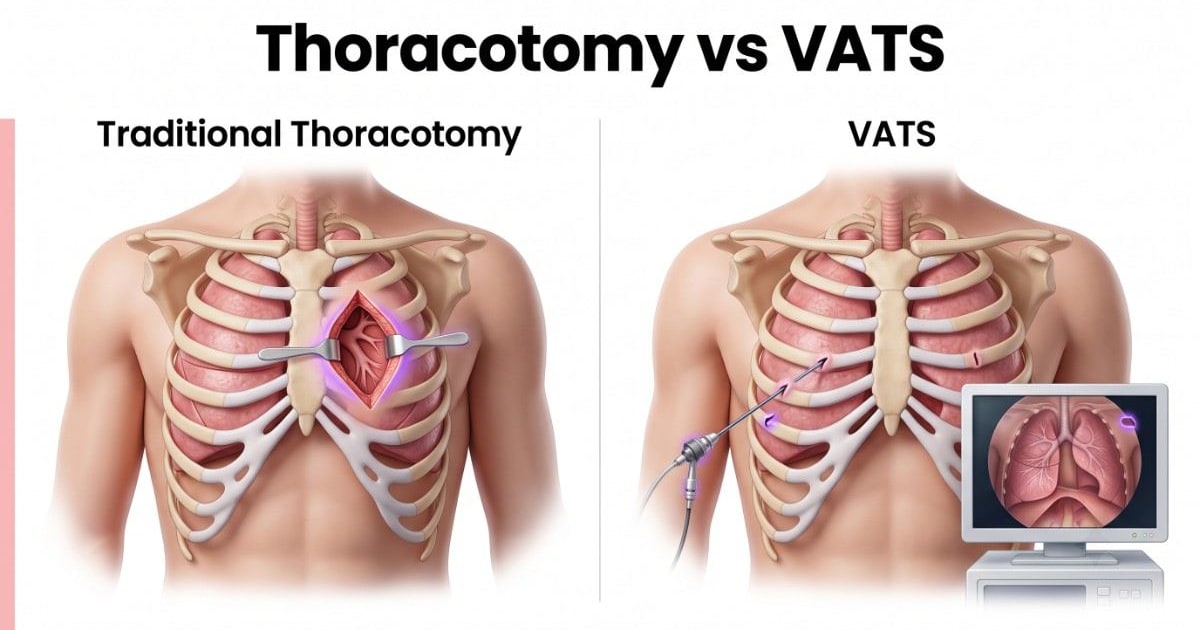
Thoracotomy and video-assisted thoracoscopic surgery (VATS) are different surgical approaches to the chest.
Thoracotomy uses an open incision between the ribs, while VATS uses a minimally invasive approach through smaller incisions and a camera. When VATS is suitable, it may be associated with less postoperative pain, shorter hospital stays and faster recovery than open surgery.
However, VATS is not appropriate for every patient or every procedure. The surgeon may recommend thoracotomy when the condition, anatomy, complexity of surgery or need for access makes an open approach more suitable.
Pain management of thoracotomy
Pain after thoracotomy is expected because the surgery involves an incision between the ribs and manipulation of the chest wall.
Doctors may use different methods to control pain, including oral medicines, intravenous medicines or regional pain-control techniques. Good pain management is important because it allows patients to breathe deeply, cough effectively and gradually become mobile after surgery.
Your pain should gradually improve as healing progresses, but recovery varies from person to person.
Risks of thoracotomy
Thoracotomy is a major operation and can have potential complications.
Possible risks include:
Bleeding
Infection
Pain
Problems related to general anaesthesia
Fluid around the lungs
Air leakage from the lung
Partial collapse of lung tissue
Blood clots
Heart rhythm problems
Longer-lasting pain in some patients
The risk depends on the type of surgery, the underlying condition, age, general health and other individual factors.
Placement of chest tube after thoracotomy
A chest tube is commonly placed during thoracic surgery to help remove air, blood or fluid from the chest.
After thoracotomy, the chest tube may remain in place until the lung has expanded adequately and there is no longer a need for drainage. The timing varies depending on the procedure and recovery.
The surgical team will monitor the amount and type of drainage and decide when the tube can be safely removed.
Recovery of thoracotomy
Recovery after thoracotomy takes time. Immediately after surgery, you may be monitored in a recovery area or intensive care setting before moving to a regular hospital room when your condition is stable.
Your healthcare team may encourage you to:
Start walking gradually
Perform breathing exercises
Cough safely to clear secretions
Take prescribed pain medicines
Follow wound-care instructions
Avoid heavy lifting until cleared
Attend follow-up appointments
Breathing exercises and gradual movement are important parts of recovery after chest surgery.
How painful is thoracotomy recovery?
Thoracotomy recovery can involve significant chest discomfort, particularly during the early period. Pain may be noticeable when coughing, taking deep breaths, changing position or moving the upper body.
Pain management, breathing exercises and gradual physical activity can support recovery. Some patients may experience longer-lasting pain, known as post-thoracotomy pain syndrome.
Your surgeon will guide you on activity levels and when you can safely return to work, driving, exercise and other daily activities.
How long does thoracotomy recovery take?
The recovery period varies according to the procedure, underlying disease and overall health.
Hospitalisation can often last around a week after thoracotomy when recovery is uncomplicated, while returning to normal activities may take several weeks or longer.
Some patients may recover more quickly, while complex surgery or postoperative complications can extend recovery.
What is the cost of thoracotomy in India?
The cost of thoracotomy surgery in India can vary significantly. It depends on the city, hospital, surgeon, type and complexity of surgery, anaesthesia, room category, investigations, ICU care and postoperative treatment.
Published estimates from different healthcare sources can differ considerably, so patients should request a procedure-specific estimate from the hospital rather than relying on a single standard figure.
When to Consult a Specialist
You should consult a specialist if your doctor has identified a lung, chest or pleural condition that may require surgical treatment.
A thoracic surgeon can assess your diagnosis, review imaging and other test results, explain whether thoracotomy is required and discuss whether a minimally invasive approach such as VATS may be appropriate.
Finding the right specialist for thoracotomy surgery
Choosing the right specialist is an important part of planning major chest surgery. The appropriate thoracic surgeon and hospital can depend on your diagnosis, the complexity of the procedure and the treatment facilities required.
GetBedscan help you explore hospitals, find relevant specialists and get support with consultation and treatment planning.
Conclusion
Thoracotomy is an open chest surgical approach that gives the surgeon direct access to the lungs and other structures inside the chest. It may be required for certain cancers, injuries and complex conditions when an open approach is considered more suitable.
Although recovery can involve pain and require several weeks of gradual rehabilitation, appropriate pain management, breathing exercises, early movement and follow-up care can support recovery. Your surgeon can explain why thoracotomy is recommended and whether another approach, such as VATS, may be suitable for your condition.
FAQs
Q: What is thoracotomy surgery?
Thoracotomy is an open chest surgery in which the surgeon makes an incision between the ribs to access structures inside the chest.
Q: When is thoracotomy necessary?
Thoracotomy may be needed for certain lung cancers, chest injuries, pleural conditions, oesophageal problems and complex chest procedures where direct access is required.
Q: What is the difference between thoracotomy and VATS?
Thoracotomy uses an open incision between the ribs, while VATS uses smaller incisions and a camera. VATS may provide less postoperative pain and faster recovery when it is appropriate, but it cannot replace thoracotomy in every situation.
Q: How painful is thoracotomy recovery?
Pain after thoracotomy can be significant because the surgery involves the chest wall. Pain medicines and other pain-control methods are used to help patients breathe, move and recover comfortably.
Q: How long does thoracotomy recovery take?
Hospital recovery may take about a week in uncomplicated cases, while returning to normal activities can take several weeks or longer depending on the surgery and individual recovery.
Q: What is the cost of thoracotomy in India?
There is no fixed cost. It totally depends on the procedure, hospital, city, surgeon, anaesthesia, room category, investigations and postoperative care. A personalised hospital estimate is more reliable than a general price range.
Q: Is thoracotomy a major surgery?
Yes, thoracotomy is a major surgical approach involving an open incision in the chest, and it requires hospitalisation and a structured recovery period.
Disclaimer: This blog is for informational purposes only and does not constitute scientific
recommendations. Always consult a certified healthcare expert for analysis and remedies.