Share this Article
Being advised to undergo a bronchoscopy can naturally make you wonder what the procedure involves. Is bronchoscopy painful? Why is it done? Will a biopsy be taken? How long does the procedure take, and what should you expect afterward?
Bronchoscopy is a procedure used to examine the airways and, when needed, collect samples from the lungs. It can help doctors investigate unexplained breathing symptoms, abnormal findings on scans or X-rays, infections, bleeding from the airways and other lung conditions.
Understanding the bronchoscopy procedure, preparation, possible risks and recovery can help you feel more prepared before speaking with your doctor.
What Is Bronchoscopy?
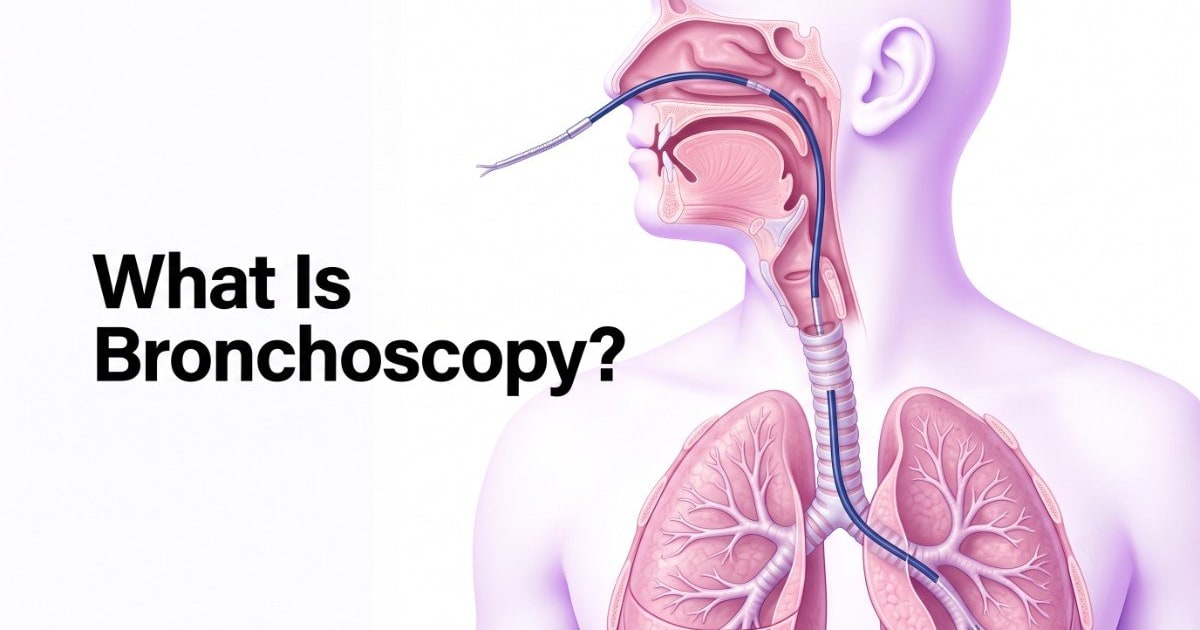
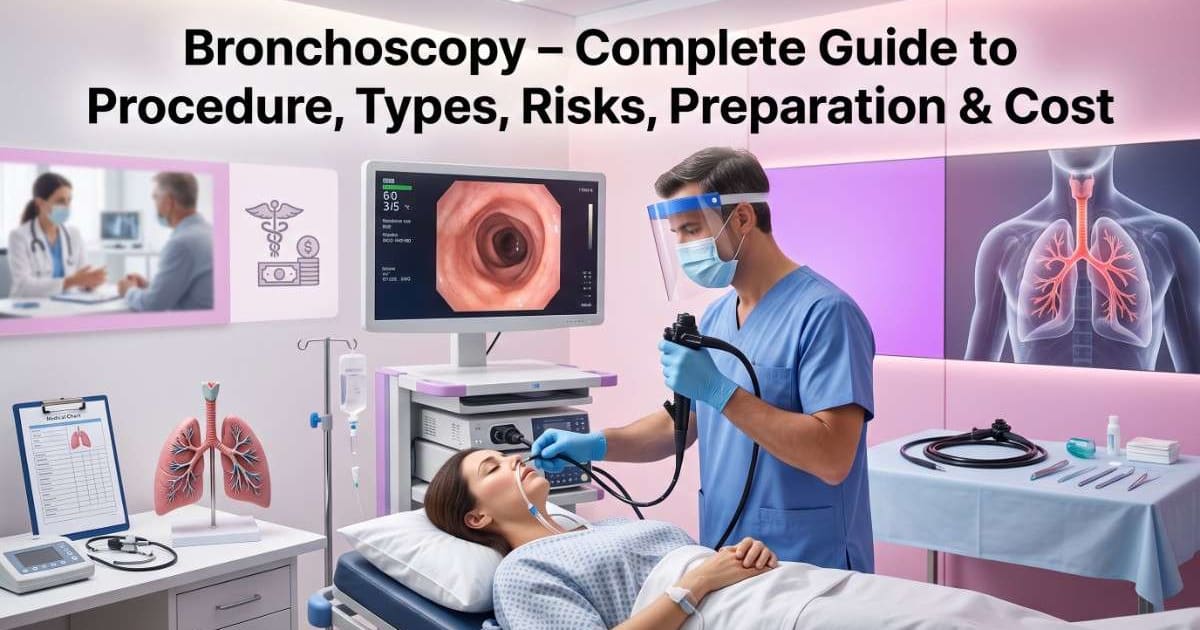
Bronchoscopy is an airway examination procedure in which a doctor uses a bronchoscope, a thin tube with a camera and light, to look inside the windpipe and the larger breathing tubes of the lungs.
Depending on the reason for the procedure, the doctor may simply examine the airways or use the bronchoscope to collect samples. These may include tissue biopsies, brushings or fluid samples from the lungs.
Bronchoscopy can be used for both diagnosis and, in selected situations, treatment. The exact type of bronchoscopy recommended depends on your symptoms, scan findings and the lung condition being investigated.
Why is a bronchoscopy done?
A doctor may recommend bronchoscopy when more information is needed about a lung or airway problem. Common reasons include:
Persistent or unexplained cough
Coughing up blood
Unexplained changes seen on a chest X-ray or CT scan
Suspected lung infection
Abnormal growth or mass in the lung
Airway blockage or narrowing
Need for a lung or airway biopsy
Need to collect fluid or cell samples for testing
Bronchoscopy can allow the doctor to directly see the airways and obtain samples that can be examined in a laboratory.
Types of bronchoscopy
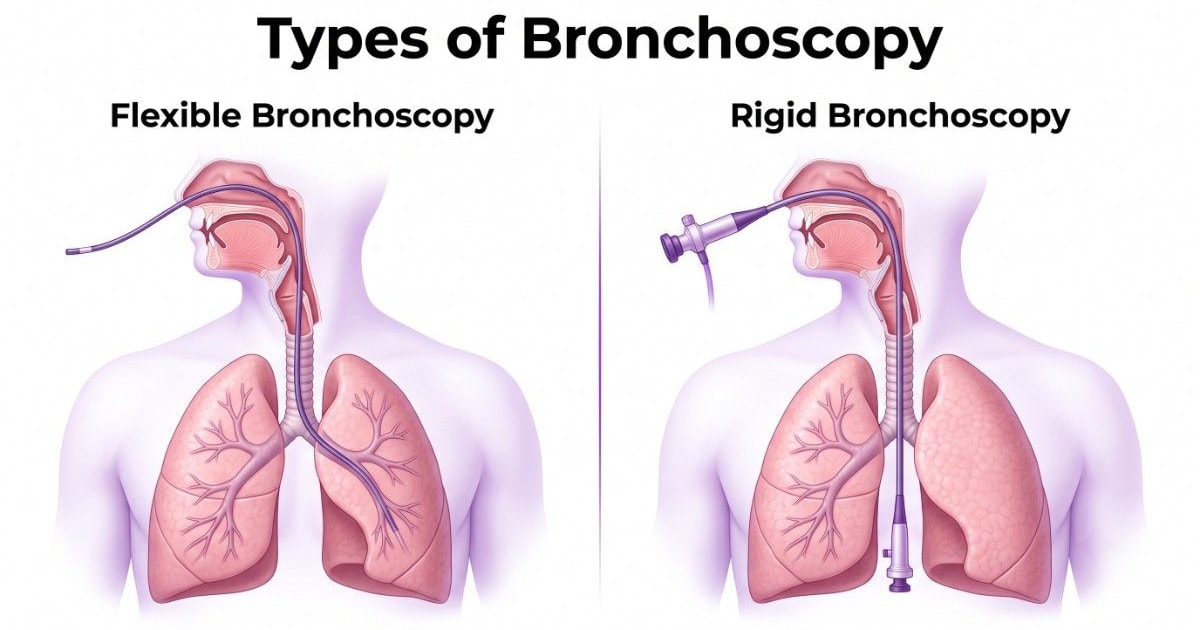
1. Flexible bronchoscopy
Flexible bronchoscopy is the more commonly used type. It uses a thin, flexible tube that can pass through the nose or mouth and into the windpipe and bronchi.
Because the tube is flexible and relatively narrow, it can reach different parts of the airways while allowing the doctor to examine the airway lining and collect samples when required. Local anaesthetic and sedation may be used to improve comfort.
2. Rigid bronchoscopy
Rigid bronchoscopy uses a straight, hollow tube and is generally performed under general anaesthesia. It may be considered when a larger instrument is needed, when more extensive airway treatment is required or in certain complex airway conditions.
The choice between flexible and rigid bronchoscopy depends on the purpose of the procedure and the patient's individual condition.
Steps of bronchoscopy procedure
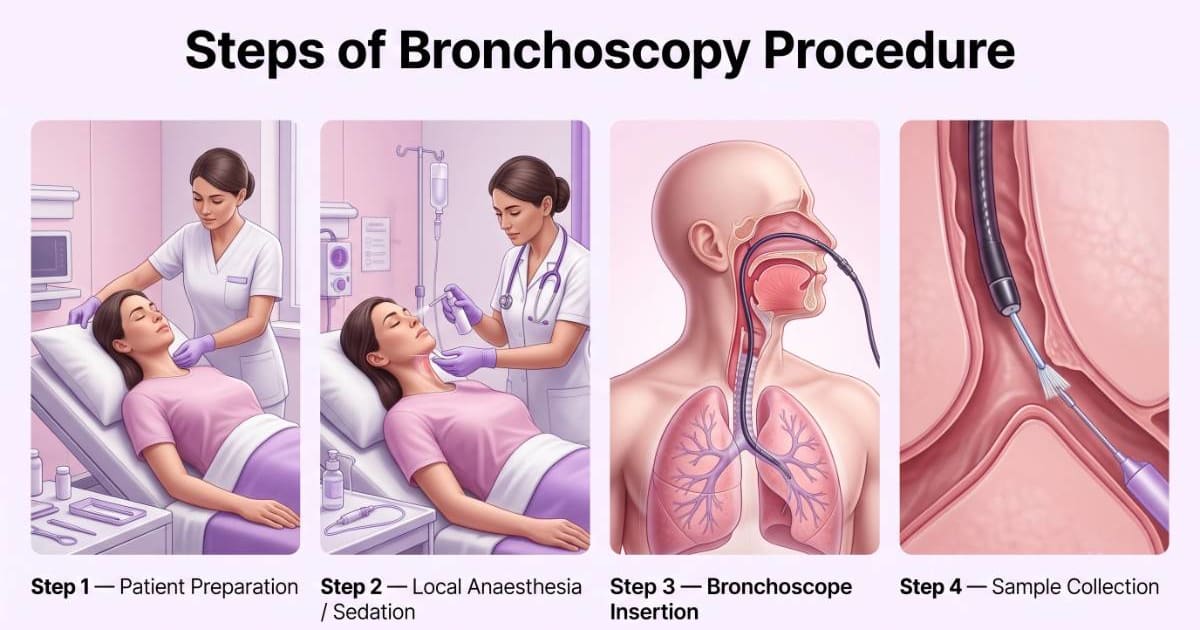
Before the procedure, your doctor will review your medical history, medicines and any relevant test reports. You may be advised to avoid food and drinks for a specified period before bronchoscopy. If you take blood-thinning medicines or medicines for diabetes, your doctor may provide specific instructions about them.
During flexible bronchoscopy, the throat and nasal passage may be numbed with a local anaesthetic. Sedation may also be given to help you relax. The bronchoscope is then gently passed through the nose or mouth, down the windpipe and into the airways.
The doctor examines the breathing tubes and may collect samples if necessary. A small tissue sample can be taken using tiny instruments passed through the bronchoscope. Fluid can also be introduced and collected for testing, a process known as bronchoalveolar lavage or BAL.
Biopsy through bronchoscopy
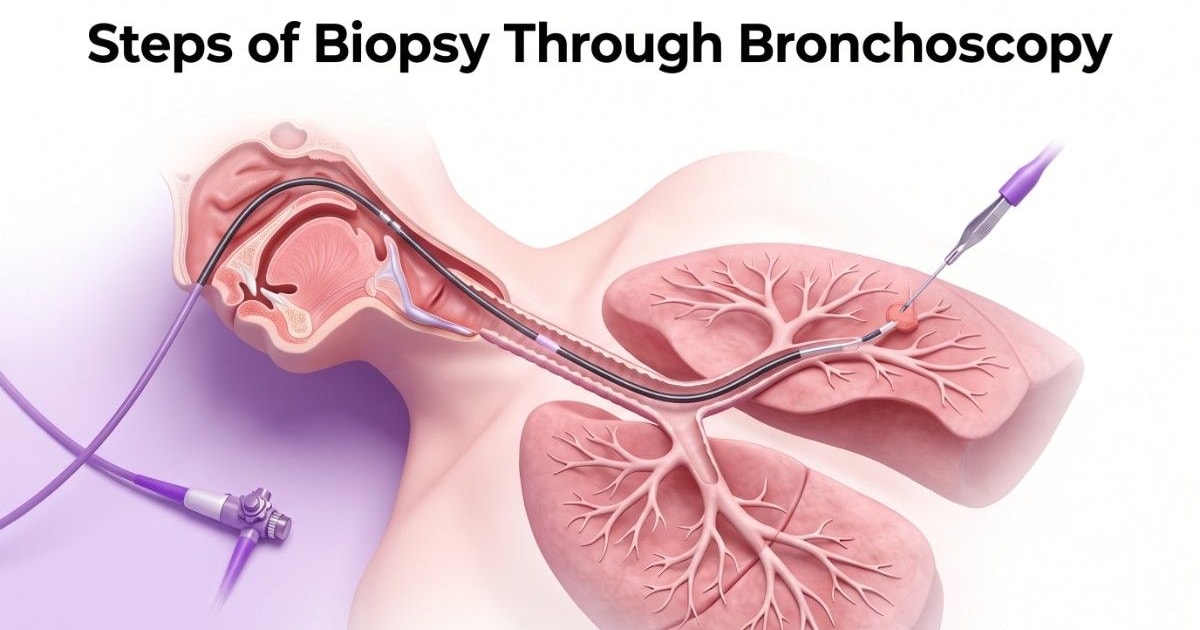
A biopsy through bronchoscopy involves removing a small tissue sample from an area that needs further examination. The sample is then sent to a laboratory.
A biopsy may help doctors identify abnormal cells, certain infections or other lung conditions. Not every bronchoscopy requires a biopsy. Whether one is needed depends on what the doctor sees and the reason for performing the procedure.
BAL — Bronchoalveolar Lavage
Bronchoalveolar lavage, commonly called BAL, is a technique used to collect fluid and cells from the lower airways.
During the procedure, a small amount of sterile saline is introduced through the bronchoscope and then collected. The sample can be tested for infection, inflammation or abnormal cells.
Is bronchoscopy painful?
Bronchoscopy is generally performed with measures to make the procedure more comfortable. Flexible bronchoscopy may involve local anaesthetic to numb the nose and throat along with sedation.
You may experience coughing, a sensation of pressure or some throat discomfort during or after the procedure. The exact experience varies from person to person.
If a biopsy is performed, the doctor will use appropriate techniques to minimise discomfort. Your healthcare team will also monitor you during the procedure.
Preparation of bronchoscopy
Proper preparation can reduce the risk of complications and help the procedure go smoothly.
Your doctor may ask you to:
Avoid eating and drinking for a specific period
Discuss blood-thinning medicines before the procedure
Inform the medical team about diabetes medicines
Tell your doctor about allergies and existing medical conditions
Arrange for someone to take you home if sedation is used
Do not stop or change any prescribed medicine unless your doctor specifically advises you to do so.
Risks of bronchoscopy
Bronchoscopy is generally considered a safe procedure, but like any medical procedure, it can have risks.
Possible complications may include:
Sore throat or temporary cough
Bleeding, particularly when a biopsy is performed
Infection
Reaction to sedation or anaesthesia
Temporary breathing problems
Pneumothorax or collapsed lung in some procedures involving lung tissue
Major bleeding and serious complications are uncommon, but the risk can depend on the type of bronchoscopy and the patient's health.
Recovery of bronchoscopy
After the procedure, you may remain under observation until the effects of sedation and local anaesthetic wear off. If your throat has been numbed, you may need to wait before eating or drinking.
A mild sore throat, cough or tiredness can occur temporarily. Your doctor will tell you when you can return to normal activities and whether any additional precautions are required.
If a biopsy or another intervention was performed, recovery instructions may be different.
Results and report of bronchoscopy
The bronchoscopy report may describe what the doctor observed inside the airways. If tissue, fluid or cell samples were collected, laboratory testing may take additional time.
The final report can help your doctor understand the cause of an abnormal finding, infection, inflammation or other lung problem. Your doctor will explain the results and discuss whether further tests or treatment are needed.
What is the cost of a bronchoscopy in India?
The cost of bronchoscopy in India does not have one fixed price. It can vary depending on whether the procedure is flexible or rigid, whether a biopsy or BAL is performed, the type of anaesthesia or sedation, hospital facilities, city and any additional tests required.
Published estimates vary considerably between facilities and procedure types, so it is better to ask the hospital for a detailed estimate based on the specific bronchoscopy being planned.
When to Consult a Specialist
You may need to consult a pulmonologist or another appropriate specialist if you have persistent respiratory symptoms, unexplained findings on chest imaging, recurrent lung infections, coughing up blood or symptoms that have not improved with initial treatment.
Your doctor can determine whether bronchoscopy is appropriate or whether another investigation would be more suitable.
Finding the right specialist for bronchoscopy
The right specialist depends on why bronchoscopy has been recommended. A pulmonologist or thoracic specialist may evaluate your condition and determine whether the procedure is required.
GetBeds can help you explore hospitals, find relevant specialists and get guidance while planning consultations and treatment.
Conclusion
Bronchoscopy allows doctors to look inside the airways and, when needed, collect tissue, fluid or cell samples for further testing. Flexible and rigid bronchoscopy are used for different clinical situations, and the procedure may help investigate infections, abnormal scans, persistent symptoms and other airway or lung problems.
Understanding the bronchoscopy procedure, preparation, risks, recovery and possible cost can help you have a more informed discussion with your healthcare specialist.
FAQs
Q: What is a bronchoscopy, and why is it done?
Bronchoscopy is a procedure used to examine the windpipe and airways of the lungs. It may be recommended to investigate persistent symptoms, abnormal scans, infections, bleeding or other lung and airway problems.
Q: How is bronchoscopy performed?
A bronchoscope is passed through the nose or mouth into the windpipe and airways. Depending on the type of procedure, the doctor may use local anaesthetic, sedation or general anaesthesia.
Q: Is bronchoscopy painful?
Bronchoscopy is usually performed with measures to improve comfort. You may experience coughing, pressure or mild throat discomfort during or after the procedure.
Q: What is the difference between flexible and rigid bronchoscopy?
Flexible bronchoscopy uses a thin, flexible tube and is commonly used for airway examination and sampling. Rigid bronchoscopy uses a straight tube and may be used for selected complex airway procedures.
Q: What is the cost of bronchoscopy in India?
The cost varies according to the type of bronchoscopy, hospital, city, anaesthesia, biopsy or BAL and other required investigations. A hospital can provide a more accurate estimate based on your procedure.
Q: How long does bronchoscopy take?
The actual procedure may be relatively short, but the total hospital visit can take longer because of preparation, sedation and post-procedure observation.
Disclaimer: This blog is for informational purposes only and does not constitute scientific recommendations. Always consult a certified healthcare expert for analysis and remedies.