Share this Article
You sit down, the cuff tightens around your arm, and a few seconds later a nurse reads out two numbers. Most of us just nod like we understood. The truth is, a lot of people never learn what those numbers actually mean or whether the reading they just got is even normal for their age.
Here's the thing: normal blood pressure isn't one fixed number that applies to a 22-year-old and a 65-year-old equally. It shifts as you get older, and men and women often track a little differently too. This guide walks through what counts as normal at different ages, with charts you can actually use and check yourself against.
One note before we dive in. Numbers on a chart are a reference point, not a diagnosis. If something here surprises you, that's a reason to call your doctor, not a reason to panic or self-treat.
What do the blood pressure numbers mean?
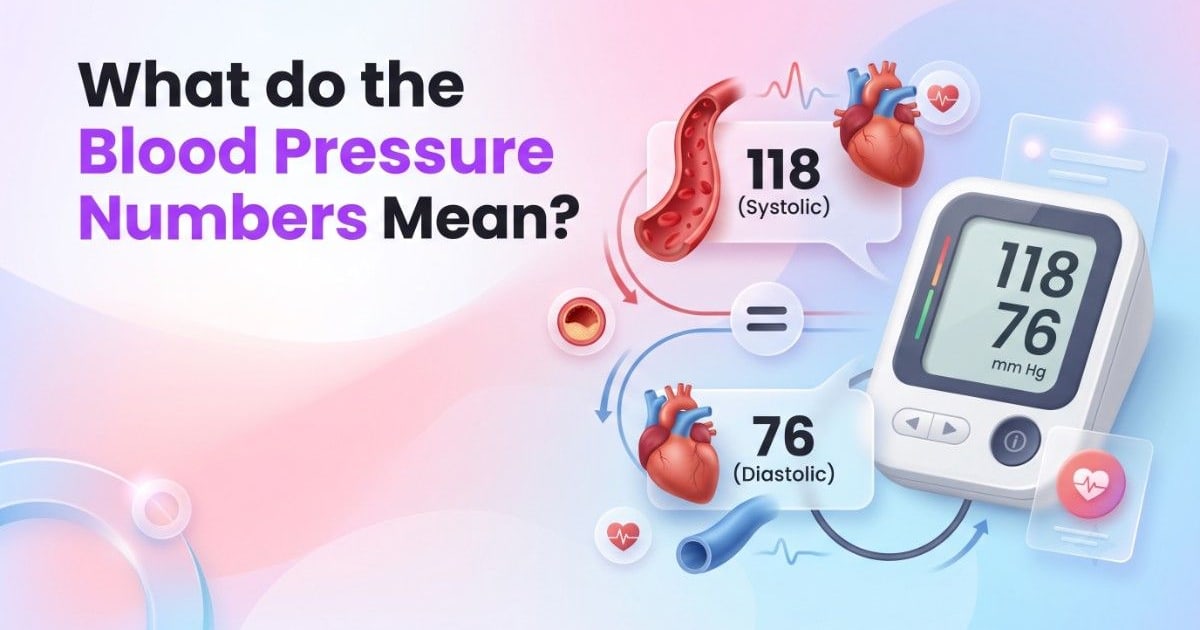
A blood pressure reading looks like this: 118/76 mm Hg. The first number is systolic pressure, the force of blood pushing against your artery walls when your heart beats. The second number is diastolic pressure, the pressure in your arteries between beats, when your heart is resting.
People tend to fixate on the top number because it feels like "the main one". That's a mistake. A normal systolic reading with a high diastolic number still counts as high blood pressure. Doctors read both numbers together, and you should too.
Normal blood pressure chart by age
For most healthy adults, anything under 120/80 mm Hg counts as normal. But averages creep up with age. Arteries get a bit stiffer over the decades, and that shows up in the numbers.
Age Group | Men (mm Hg) | Women (mm Hg) |
18–39 | 119/70 | 110/68 |
40–59 | 124/77 | 122/74 |
60+ | 133/69 | 139/68 |
Look closely at that last row. Women's average readings actually pass men's after 60. This often lines up with menopause, when hormonal shifts start affecting blood vessels in ways they didn't before.
Blood Pressure Categories
Age charts are useful, but doctors also sort readings into categories that apply regardless of how old you are.
Category | Systolic (mm Hg) | Diastolic (mm Hg) |
Normal | Below 120 | Below 80 |
Elevated | 120–129 | Below 80 |
High (Stage 1) | 130–139 | 80–89 |
High (Stage 2) | 140 or higher | 90 or higher |
Hypertensive Crisis | Above 180 | Above 120 |
Low Blood Pressure | Below 90 | Below 60 |
That bottom-but-one row matters most. A reading above 180/120 isn't something to wait out. Get medical help right away, especially if it comes with chest pain, confusion, or shortness of breath, as these may also be warning signs of a heart attack. If high blood pressure is accompanied by symptoms of reduced blood flow to the heart, your doctor may recommend coronary 33 to check for blocked coronary arteries.
Normal blood pressure by age group
18 to 39 years
This is usually the range where blood pressure sits closest to the textbook number. But "usually" isn't "automatically". Poor sleep, a stressful job, too much salt, none of that waits until you're 50 to start affecting your arteries. Get it checked at your regular visits even if you feel completely fine.
40 to 59 years
A small upward creep is common here. Blood vessels lose a bit of elasticity, and lifestyle habits that built up over twenty years start showing their effects. This is also the stretch where hypertension most often gets diagnosed for the first time. If your doctor mentions your numbers are trending up, take it seriously rather than brushing it off as normal ageing.
60 years and Older
Systolic pressure especially tends to rise further in this group. It doesn't mean high blood pressure is just "part of getting old" and nothing can be done. Managing it well later in life is one of the biggest factors in lowering stroke and heart disease risk. If high blood pressure remains uncontrolled for years, it can eventually increase the risk of heart failure and other serious cardiovascular complications.
Normal blood pressure in children
Children's blood pressure doesn't follow the adult chart at all. It depends on height and age, so pediatricians use growth-based percentiles instead of a flat number.
Age | Approximate Normal Range (mm Hg) |
1–5 years | 95/60 to 100/65 |
6–13 years | 97/62 to 104/69 |
14–17 years | 104/65 to 117/77 |
Because kids grow at such different rates, don't try to interpret a child's reading against this table on your own. Let a pediatrician do that.
What is considered low blood pressure?
Everyone worries about numbers being too high. Fewer people think about numbers being too low, but a reading consistently under 90/60 mm Hg counts as low blood pressure. It can leave you lightheaded or cause fainting spells that seem to come out of nowhere. Dehydration is a common cause. So are certain medications and some heart conditions. If you get dizzy often and your readings run low, mention it at your next appointment instead of shrugging it off.
What affects blood pressure?
Age explains part of the picture, not all of it. Salt intake matters. So does how much you move during the day, how well you sleep, whether you smoke, and what's happening in your family history. Stress plays a bigger role than most people expect too. This is why two 45-year-olds can have very different "normal" readings. The chart is a starting point, not a rulebook carved in stone. Over time, persistently uncontrolled blood pressure can also contribute to structural changes in the heart, increasing the risk of cardiomyopathy in some patients.
How to get an accurate blood pressure reading at home?

Home monitors are great, but bad technique gives you bad numbers, and bad numbers lead to unnecessary worry (or false reassurance). Sit quietly for five minutes first. Keep your arm resting at roughly heart level. Skip coffee, exercise, or a cigarette for half an hour beforehand, because all three will nudge your reading up temporarily.
Take two readings a minute apart and average them. An upper-arm cuff monitor beats the wrist or finger versions almost every time in terms of accuracy. And if you're tracking numbers over weeks, jot down the time of day too. Your doctor can spot patterns in a log that a single number never shows.
When should you call a doctor?
Don't wait if you notice readings consistently above 130/80. Your doctor may also recommend an ECG test to check whether high blood pressure has started affecting your heart's electrical activity. Same goes for a sudden drop in blood pressure that doesn't have an obvious cause, like standing up and feeling the room spin. Headaches that won't quit, chest discomfort, or blurry vision alongside an abnormal reading are worth a same-day call, not a "Let's see how I feel tomorrow."
One odd reading isn't the end of the world. A stressful commute or a rushed appointment can push numbers up temporarily. What matters is the pattern over time, and that's something a chart can't tell you. Only your doctor can.
Conclusion
Blood pressure changes with age, and the difference between men and women isn't fixed either; it shifts across the decades. Use the charts here to understand roughly where you stand, but don't treat them as a final answer. A doctor's actual conversation and actual context about your health beats a chart every time.
If you or a family member needs to check blood pressure regularly at home, having a reliable monitor and the right setup makes it a lot easier to stay consistent. You can explore home healthcare equipment to monitor your health more accurately at home.
FAQs
Q: What is the normal blood pressure range by age?
Roughly speaking, adults 18 to 39 average around 119/70 for men and 110/68 for women. Those 40 to 59 average about 124/77 and 122/74. Adults over 60 average around 133/69 and 139/68. These are averages, not hard rules, so your own normal might sit slightly outside them.
Q: What is ideal blood pressure for a 30-year-old?
Somewhere near 120/80 mm Hg or a touch below is typical for someone in their late 20s or 30s. Some healthy variation is normal at this age.
Q: Is 140/90 normal for a 60-year-old?
No, that reading falls into the Stage 2 high blood pressure category no matter the age. Averages do rise a little after 60, but 140/90 still counts as elevated and is worth discussing with a doctor.
Q: What is normal blood pressure for women?
It changes with age: around 110/68 for women 18 to 39, 122/74 for women 40 to 59, and roughly 139/68 for women 60 and up, on average.
Q: What is normal blood pressure for children?
There's no single number. It depends on age and height, generally ranging from about 95/60 for toddlers up to around 117/77 for older teens. A pediatrician can interpret it properly using growth charts.
Q: What is the low blood pressure range?
Anything consistently below 90/60 mm Hg is generally considered low. If dizziness or fainting comes along with it, get it checked.
Disclaimer:
This article is for general informational purposes only and isn't a substitute for professional medical advice, diagnosis, or treatment. Talk to a qualified healthcare provider about your own blood pressure readings or health concerns.