Share this Article
Nearly half of all adults in India have high blood pressure, and most of them have no idea. No pain, no obvious warning, no moment where the body clearly signals something is wrong. It just sits there, quietly damaging arteries and straining the heart while life continues as normal.
That's how hypertension earned the name silent killer. Not because it's rare, but because it's common, largely invisible, and genuinely dangerous when left alone.
What is high blood pressure?
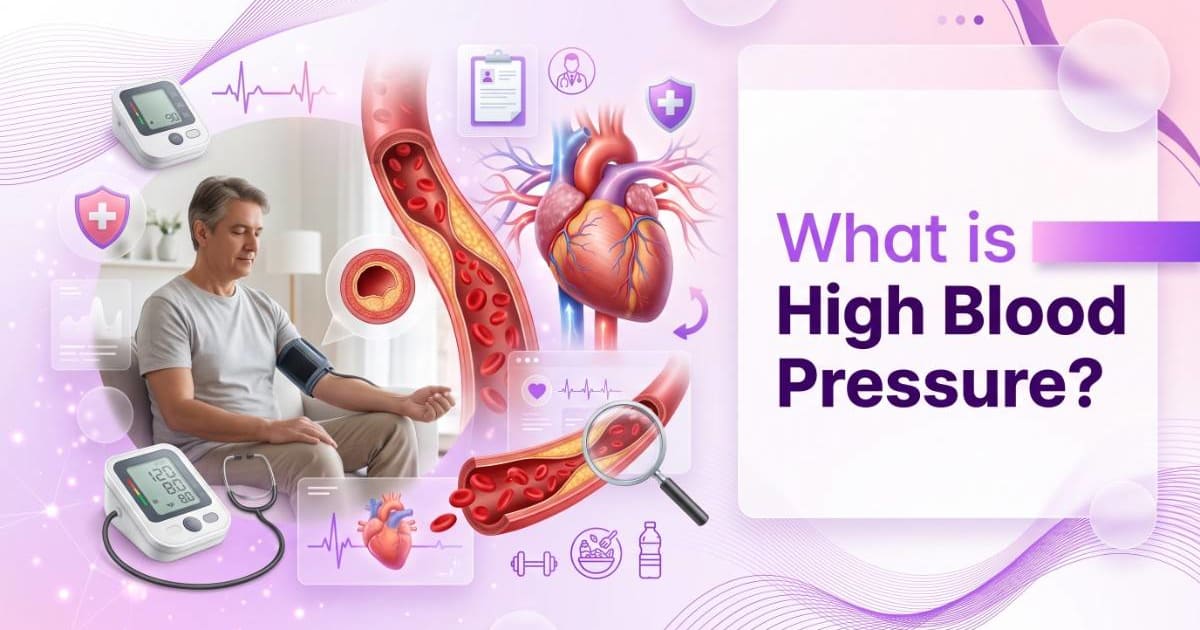
Blood pressure is the force your blood exerts against artery walls with each heartbeat. When it stays too high, arteries take damage, the heart overworks, and organs like the kidneys and brain gradually suffer the consequences.
Readings are recorded as two numbers: systolic over diastolic, such as 120/80 mmHg. Systolic is the pressure when the heart beats. Diastolic is the pressure between beats.
Understanding where your numbers fall is straightforward:
Normal: Below 120/80 mmHg
Elevated: Systolic between 120 and 129, diastolic below 80
Stage 1 hypertension: systolic 130 to 139 or diastolic 80 to 89
Stage 2 hypertension: systolic 140 or higher or diastolic 90 or higher
Hypertensive crisis: Above 180/120, requiring immediate medical attention
Blood pressure tends to rise naturally with age as arteries stiffen. Your doctor is the right person to interpret your specific readings in context.
Why is high blood pressure dangerous?
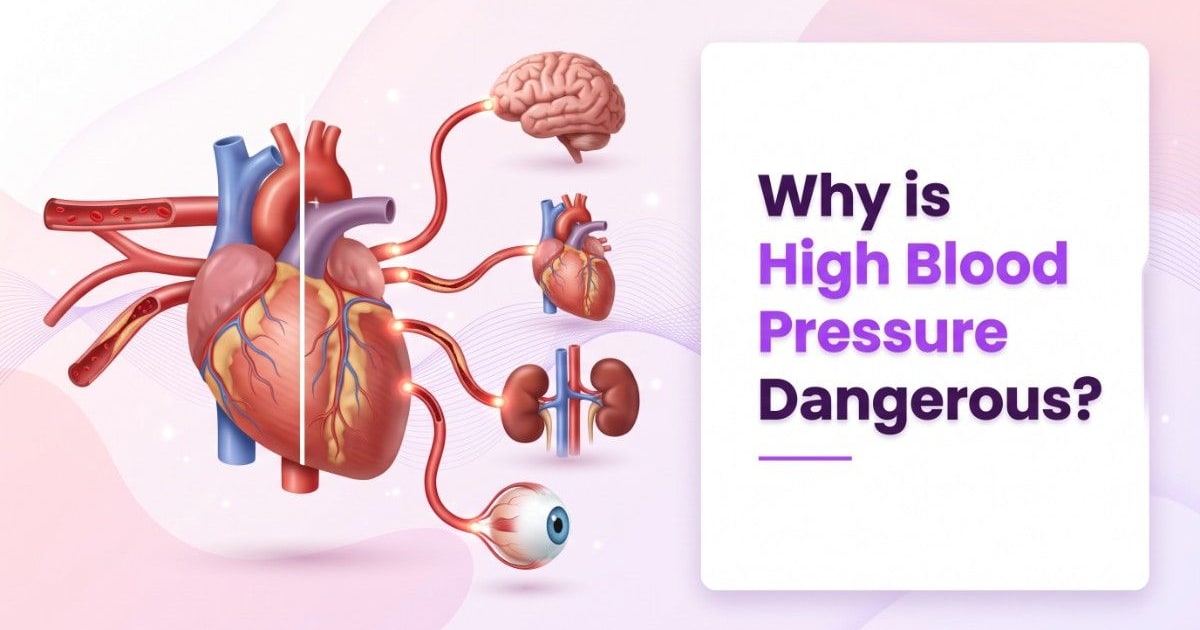
When elevated blood pressure continues for months or years, the damage compounds. Artery walls thicken. The heart enlarges, trying to keep up. Heart valve problems may also develop alongside other cardiovascular complications. Kidney vessels narrow. Eye vessels can tear.
Untreated hypertension significantly raises the risk of:
Stroke
Chronic kidney disease
Vascular dementia and cognitive decline
Vision loss
Aneurysm
Heart attack
What makes this concerning is that most people with elevated readings feel completely fine. Which is exactly why regular monitoring matters.
Symptoms of hypertension
This is the part that surprises most people: high blood pressure typically has no symptoms at all. You can live with significantly elevated blood pressure for years without a single obvious sign.
Occasional headaches or mild dizziness sometimes appear, but these are easy to attribute to stress or a bad night's sleep.
Symptoms appear when blood pressure spikes to dangerous levels. These include severe headache, chest pain, confusion, blurred vision, palpitations, shortness of breath, and swelling in the legs or feet.
If these symptoms appear alongside a very high reading, it's a medical emergency. Not a wait-and-see situation.
What causes high blood pressure?
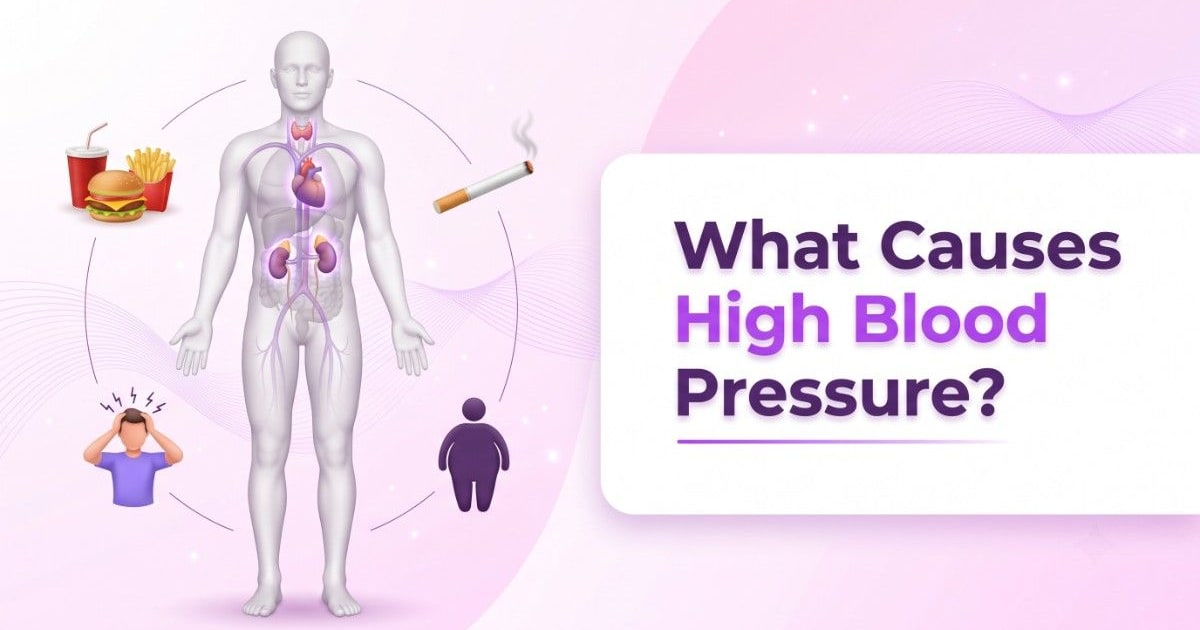
Two categories exist, and understanding which applies affects treatment.
Primary hypertension
Around 90 percent of cases. No single identifiable cause. Blood pressure rises gradually due to genetics, ageing, and lifestyle factors accumulating over years.
Secondary hypertension
Has a specific underlying cause and tends to produce higher readings that develop faster. Common causes:
Kidney disease or narrowed kidney arteries
Obstructive sleep apnea
Thyroid disorders
Adrenal gland conditions
Certain medications, including some antidepressants, NSAIDs, and birth control pills
Cocaine, amphetamines, or other stimulant drugs
Treating the underlying condition often improves or resolves the blood pressure problem.
Risk factors for high blood pressure
Some risk factors can be changed. Others can't.
Risk factors you can act on:
Smoking or tobacco use
A diet high in sodium
Low potassium intake
Excessive alcohol consumption
Physical inactivity
Obesity or significant excess weight
Chronic stress
Poorly managed diabetes
Risk factors you can't change:
Age, with risk increasing significantly after 55
Family history of hypertension
Being male before age 64 and female after 65, when the risk equalises
Chronic stress doesn't just cause occasional spikes. It sustains a state of heightened alertness that keeps blood pressure elevated and drives habits like overeating and drinking that compound the risk further.
How is high blood pressure diagnosed?
Diagnosis requires multiple readings across at least two separate visits. A single high reading isn't enough since blood pressure varies throughout the day. Some people have white coat hypertension, where readings are high in a clinic but normal at home. Others have masked hypertension, the reverse. Home blood pressure monitoring gives your doctor a much more accurate picture than occasional clinic readings alone.
High blood pressure treatment options
Treatment combines lifestyle changes with medication in most cases. Stage 1 in low-risk patients can sometimes be managed with lifestyle alone. Stage 2 typically requires both.
Hypertension: diet and lifestyle changes
Diet: The DASH diet emphasises fruits, vegetables, whole grains, and lean protein while restricting sodium to under 1,500 mg per day. Potassium-rich foods like bananas and sweet potatoes counterbalance sodium and help relax blood vessel walls.
Exercise: 150 minutes of moderate aerobic activity weekly produces measurable blood pressure reductions.
Sodium reduction: Excess sodium causes fluid retention, increases blood volume, and drives pressure up. Cutting it is one of the most direct dietary levers available.
Quitting smoking: Tobacco raises blood pressure and accelerates arterial damage. Risk starts falling within weeks of stopping.
Limiting alcohol: Heavy drinking raises blood pressure and reduces medication effectiveness.
Stress management: Practical stress reduction through sleep, physical activity, or professional support has direct cardiovascular benefit.
Blood pressure medication types
When lifestyle changes aren't sufficient, several well-established medication classes are available:
ACE inhibitors relax blood vessels by blocking a hormone that narrows them
ARBs (angiotensin receptor blockers) work through a similar mechanism with a different pathway
Calcium channel blockers prevent calcium from entering heart and artery muscle cells, reducing contraction and narrowing
Diuretics help the kidneys remove excess sodium and fluid, reducing blood volume
Beta-blockers slow the heart rate and reduce the force of contractions
Most Stage 2 patients end up on more than one medication. Combinations targeting different mechanisms work better than high doses of a single drug.
What is a hypertensive crisis?
Blood pressure at 180/120 mmHg or above is a hypertensive crisis. Without symptoms it's severe hypertension, still requiring urgent medical attention. With symptoms like chest pain, severe headache, confusion, or vision changes, it's a hypertensive emergency. Call emergency services immediately. Do not drive yourself.
Can high blood pressure be cured permanently?
Secondary hypertension caused by a specific condition can sometimes be resolved by treating that condition. Primary hypertension is generally managed rather than cured. Some people reduce or stop medication after major lifestyle changes, but this requires careful monitoring. Well-managed hypertension, through whatever combination of lifestyle and medication works, dramatically reduces the risk of the complications that make uncontrolled blood pressure so dangerous.
Conclusion
High blood pressure is common, symptom-free in most cases, and genuinely dangerous when ignored. Know your numbers, monitor at home if you have risk factors, take the lifestyle changes seriously, and follow medical guidance on medication. Early detection and consistent management make a significant difference.
FAQs
Q: What is high blood pressure, and why is it dangerous?
High blood pressure, or hypertension, means the force of blood against artery walls is consistently too high, defined as 130/80 mmHg or above. It's dangerous because it silently damages blood vessels, the heart, kidneys, and brain over time, significantly increasing the risk of heart attack, stroke, kidney failure, and dementia.
Q: What are the symptoms of high blood pressure?
Most people with high blood pressure have no symptoms at all, which is what makes it so difficult to catch without monitoring. Symptoms like severe headache, chest pain, vision changes, and confusion only tend to appear during a hypertensive crisis when readings are dangerously high.
Q: What causes high blood pressure?
Primary hypertension, accounting for about 90 percent of cases, has no single cause. It develops gradually due to ageing, genetics, and lifestyle factors. Secondary hypertension has a specific cause, such as kidney disease, sleep apnea, thyroid problems, or certain medications.
Q: How is high blood pressure diagnosed?
Through blood pressure readings taken with a cuff on the arm, confirmed across at least two separate visits to rule out temporary spikes. Home blood pressure monitoring is increasingly used to get a more complete picture of how pressure behaves throughout the day.
Q: What is a hypertensive crisis?
A hypertensive crisis occurs when blood pressure reaches 180/120 mmHg or higher. If symptoms like chest pain, severe headache, vision changes, or confusion are present, this is a hypertensive emergency requiring immediate hospital care.
Q: Can high blood pressure be cured permanently?
Secondary hypertension caused by a specific condition can sometimes be resolved by treating that condition. Primary hypertension is generally managed rather than cured, though significant lifestyle changes can sometimes reduce or eliminate the need for medication in certain patients. Consistent management dramatically reduces the risk of serious complications.
Disclaimer:
This article is for informational purposes only and does not constitute medical advice. Please consult a qualified healthcare professional for diagnosis and treatment.