Share this Article
Being diagnosed with stage 1 or stage 2 lung cancer can bring many questions. Is surgery necessary? How much of the lung needs to be removed? Will chemotherapy be needed afterwards? And what does recovery look like?
For many people with early-stage non-small cell lung cancer (NSCLC), surgery is an important treatment option when the cancer can be safely and completely removed. The type of surgery depends on the tumour’s size and location, lymph node involvement, lung function and overall health. Other treatments may also be recommended depending on the individual case.
Understanding Stage 1 and Stage 2 Lung Cancer
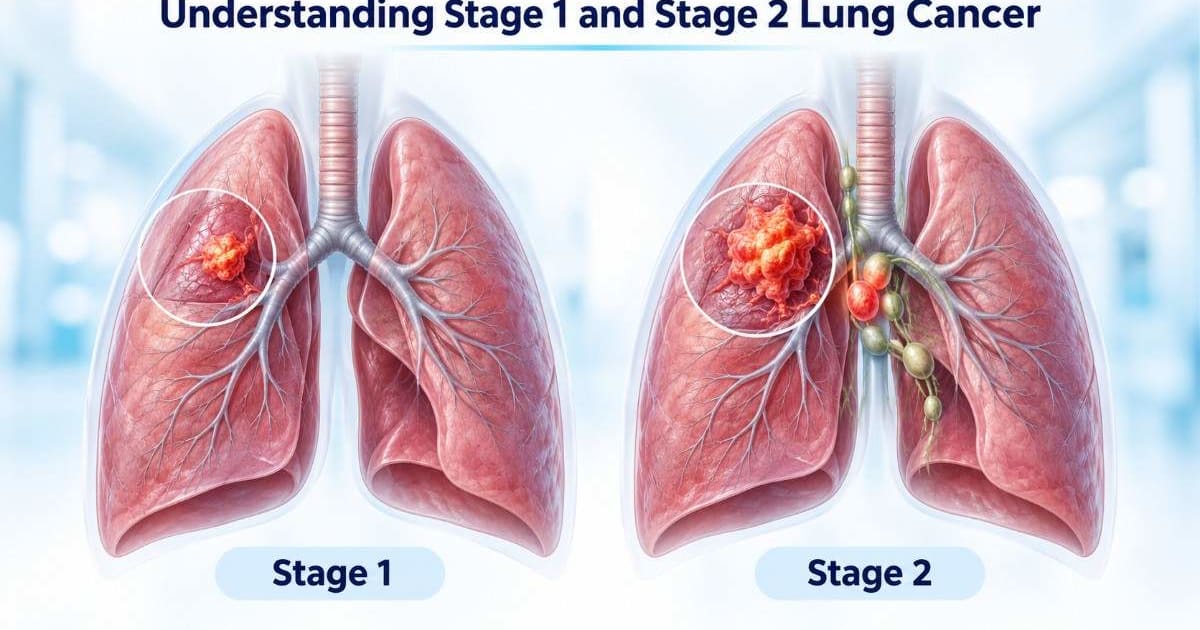
Stage 1 and stage 2 lung cancer generally refer to early-stage NSCLC that has not spread to distant parts of the body.
In stage 1, the tumour is limited to the lung and there is no regional lymph node involvement in the relevant stage categories. Stage 2 can involve a larger tumour and, depending on the specific stage, nearby lymph nodes.
The exact stage is determined using the TNM staging system, which considers the tumour, lymph nodes and distant spread. This staging helps doctors decide which treatment options may be appropriate.
When Is Surgery Recommended for Lung Cancer?
Surgery may be recommended when the tumour can be removed completely and the person is healthy enough to undergo an operation. Before surgery, doctors consider several factors, including:
Tumour size and location
Whether nearby lymph nodes are involved
Lung function
Heart and overall health
Ability to tolerate anaesthesia and surgery
Surgery is commonly used for stage I NSCLC and is also an important treatment option for stage II NSCLC. However, not everyone with stage 1 or 2 lung cancer will have the same treatment plan.
Types of Lung Cancer Surgery
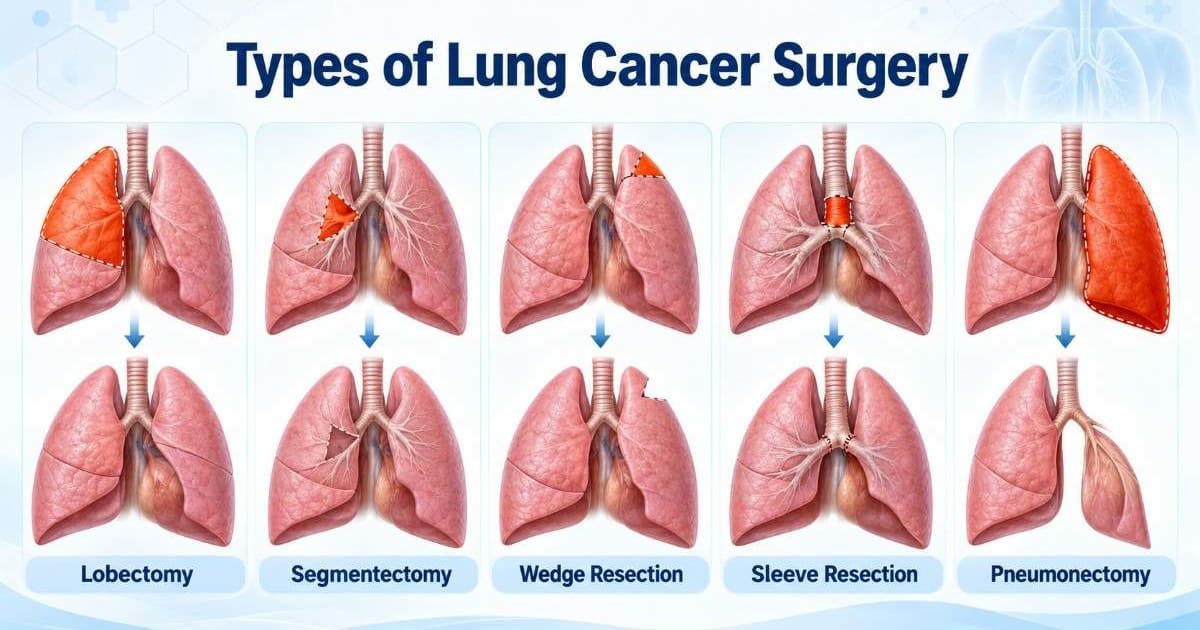
The type and extent of surgery depend on factors such as the tumour’s size and location, lymph node involvement and the person's lung function and overall health.
1. Lobectomy
A lobectomy removes the entire lobe of the lung containing the tumour. It is a common type of lung cancer surgery and may be considered when removing a full lobe is appropriate.
2. Segmentectomy
A segmentectomy removes a specific segment of a lung lobe rather than the entire lobe. It may be considered for selected smaller tumours or when preserving lung tissue is particularly important.
3. Wedge Resection
A wedge resection removes the tumour along with a small, wedge-shaped portion of surrounding lung tissue. It may be used in selected patients, depending on the tumour and their lung function.
4. Sleeve Resection
A sleeve resection removes part of the airway along with the affected lung tissue and reconnects the remaining airway. It may be considered when the tumour is located close to a major airway.
5. Pneumonectomy
A pneumonectomy removes an entire lung. It is generally reserved for selected cases where the tumour cannot be adequately removed with a smaller lung resection.
Lymph Node Assessment During Lung Cancer Surgery
Lymph nodes near the tumour may be sampled or removed during surgery. Examining these lymph nodes helps determine whether cancer has spread beyond the primary tumour.
The lymph node findings can also help doctors decide whether additional treatment, such as chemotherapy or another therapy, should be considered after surgery.
Surgical Approaches for Lung Cancer
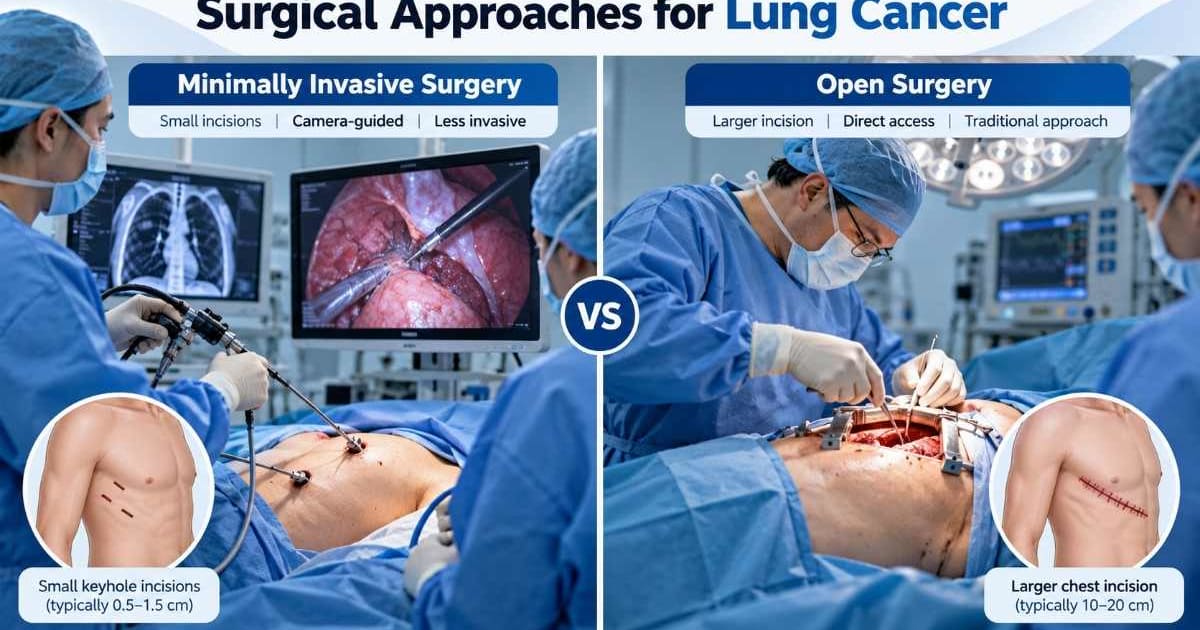
Lung cancer surgery can be performed through different approaches.
Minimally Invasive Lung Surgery
Video-assisted thoracoscopic surgery (VATS) uses small chest incisions and a camera to perform the operation. Robotic-assisted surgery is another minimally invasive approach used in selected cases.
These approaches may allow smaller incisions and can support recovery, depending on the procedure and individual circumstances.
Open Lung Cancer Surgery
Open surgery, or thoracotomy, involves a larger incision in the chest to provide access to the lung. It may be necessary when the tumour or operation is complex or when minimally invasive surgery is not appropriate.
The choice between open and minimally invasive surgery depends on the tumour, the planned operation and the surgeon’s assessment.
Preparing for Lung Cancer Surgery
Preparation may include lung function testing, blood tests, imaging and an assessment of overall health.
If you smoke, your healthcare team may advise you to stop before surgery. Improving nutrition, staying physically active within your ability and following a prehabilitation plan may also help prepare the body for treatment and recovery.
What Happens After Surgery?
After lung cancer surgery, patients are monitored for breathing, pain, infection and other possible complications. A temporary chest tube may be used to drain air or fluid from the chest.
Recovery varies depending on the type of surgery, the surgical approach and the person's overall health. Walking, breathing exercises and gradually increasing physical activity can be part of recovery. The chest tube is usually removed once the healthcare team determines that it is no longer needed.
Risks of Lung Cancer Surgery
Like any major operation, lung cancer surgery can involve risks. These may include:
Bleeding
Infection
Pneumonia
Blood clots
Air leakage
Heart rhythm problems
Breathing difficulties
The individual risk depends on the procedure and the person's health.
Is Chemotherapy Needed After Stage 1 or Stage 2 Lung Cancer Surgery?
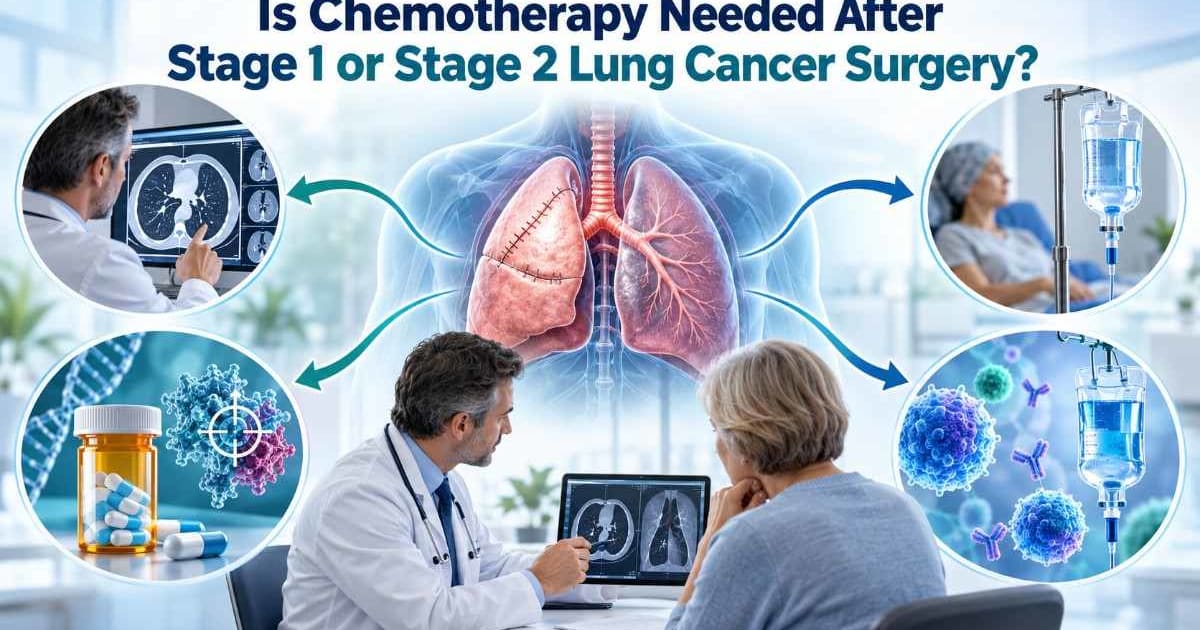
Not everyone needs chemotherapy after surgery. For completely resected stage I NSCLC, chemotherapy is not routinely recommended for everyone, although selected patients, particularly those with larger stage IB tumours, may benefit from additional treatment. For stage II NSCLC, postoperative chemotherapy may be recommended because it can reduce the risk of recurrence and improve outcomes in appropriate patients.
Depending on the tumour's molecular characteristics and other clinical factors, targeted therapy or immunotherapy may also be considered after surgery in selected patients.
Other treatments, including targeted therapy or immunotherapy, may also be considered for selected patients based on tumour characteristics.
Can Stage 1 Lung Cancer Be Cured With Surgery?
For some people with completely resectable early-stage NSCLC, surgery can be performed with curative intent. However, whether surgery alone is sufficient depends on the cancer's stage, tumour characteristics, lymph node findings and other factors.
It is important to remember that not every person with stage 1 lung cancer will have the same treatment plan.
What Is the Survival Rate After Stage 1 and Stage 2 Lung Cancer Surgery?
There is no single survival rate that applies to everyone with stage 1 or stage 2 lung cancer.
Outcomes depend on factors such as the exact stage, tumour biology, lymph node involvement, overall health and whether the cancer returns after treatment. Your specialist can explain the expected outlook based on your individual diagnosis rather than relying on a general percentage.
What Is the Recurrence Risk After Early-Stage Lung Cancer Surgery?
Lung cancer can return even after successful surgery. The risk depends on factors such as stage, tumour characteristics, lymph node involvement and the completeness of tumour removal. Regular follow-up is therefore an important part of care after surgery.
When to Consult a Specialist
If you have been diagnosed with stage 1 or stage 2 lung cancer, a specialist can help determine whether surgery is appropriate and what type of treatment may be suitable.
You may need evaluation by a thoracic surgeon, pulmonologist or oncology team depending on your diagnosis and treatment plan.
Finding the Right Specialist for Lung Cancer Surgery
Choosing the right specialist involves understanding your diagnosis, the type of surgery being considered and the experience needed for your particular condition. GetBeds helps patients explore hospitals and find specialists for consultations, treatment planning and surgery-related care.
Find the Right Lung Cancer Specialist with GetBeds.
Conclusion
Surgery plays an important role in the treatment of many people with stage 1 and stage 2 NSCLC when the cancer can be safely removed. The type of surgery may range from a wedge resection or segmentectomy to a lobectomy or, in selected cases, pneumonectomy.
Treatment does not stop at the operation. Lymph node findings, tumour characteristics and the patient's overall health may determine whether additional treatment is needed. A specialist evaluation is essential for developing an appropriate treatment plan.
FAQs
Q: Can stage 1 lung cancer be cured with surgery?
For selected patients with completely resectable stage 1 NSCLC, surgery may be performed with curative intent. The individual outlook depends on the exact stage and tumour characteristics.
Q: What is the best surgery for Stage 1 Lung Cancer?
There is no single best operation for every patient. Lobectomy, segmentectomy or wedge resection may be considered depending on tumour size, location and lung function.
Q: What is the survival rate for Stage 1 & 2 Lung Cancer Surgery?
Survival varies between individuals and depends on stage, tumour characteristics, lymph node involvement and overall health. A specialist can provide a more relevant estimate based on the individual diagnosis.
Q: Is chemotherapy needed after Stage 2 Lung Cancer Surgery?
Chemotherapy may be recommended for some people after surgery for stage 2 NSCLC. The decision depends on the pathology and individual treatment plan.
Q: What is the recurrence rate after early-stage lung cancer surgery?
There is no single recurrence rate for all patients. Risk varies according to stage, tumour biology, lymph node involvement and other factors.
Disclaimer: This blog is for informational purposes only and does not constitute scientific recommendations. Always consult a certified healthcare expert for analysis and remedies.