Share this Article
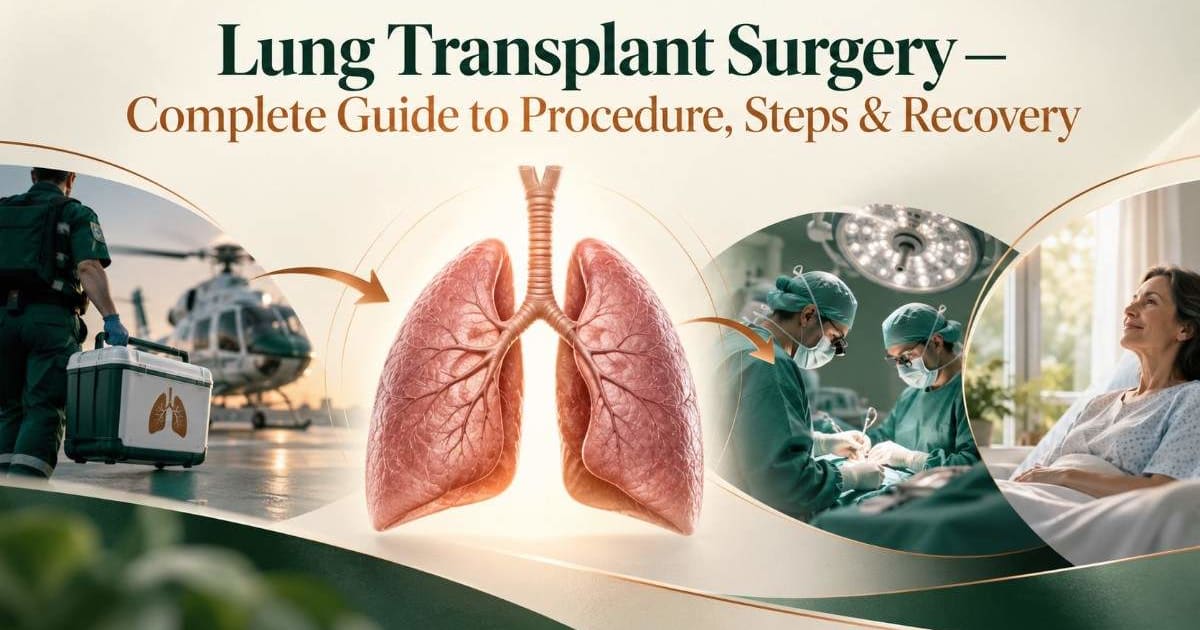
A lung transplant is a major treatment for people with severe lung disease when other treatments are no longer enough. It involves replacing one or both diseased lungs with healthy lungs from a donor.
The process includes medical evaluation, donor matching, surgery, ICU care, rehabilitation and lifelong follow-up. Understanding each stage can help patients and families know what to expect.
What Is Lung Transplant Surgery
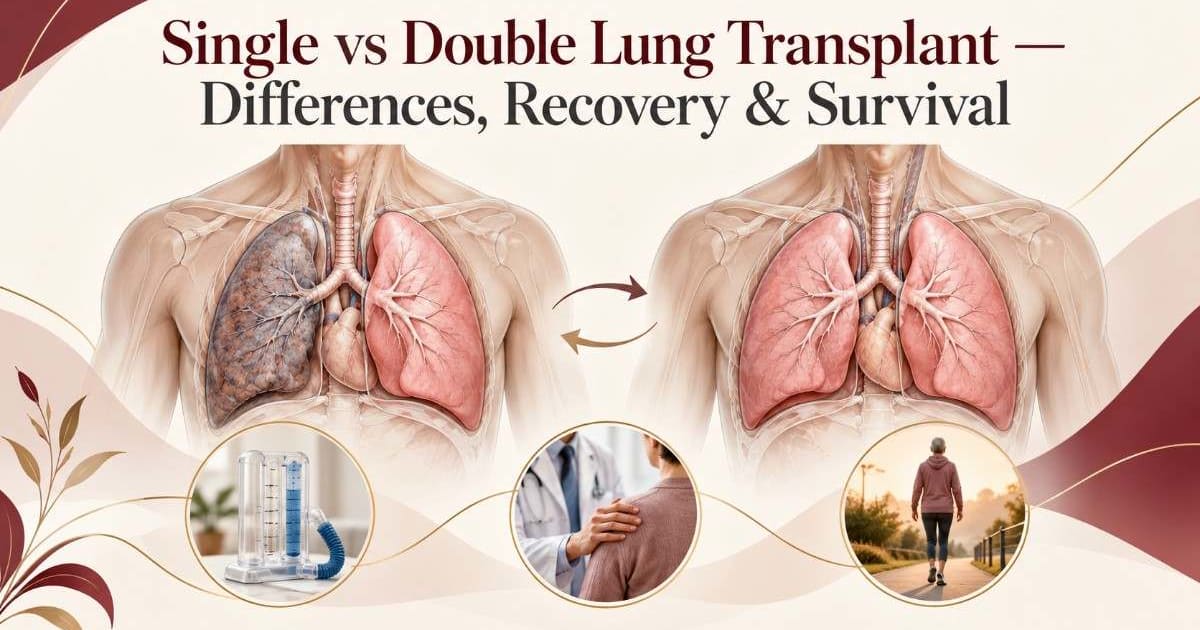
Lung transplant surgery replaces one or both damaged lungs with donor lungs. A single lung transplant replaces one lung, while a double lung transplant replaces both.
The choice depends on the patient's lung disease, severity, overall health and other medical factors. Since the immune system can recognize the donor lung as foreign, immunosuppressive medicines are required after transplantation to reduce the risk of rejection.
When Lung Transplant Is Recommended
A transplant may be considered when advanced lung disease continues to worsen despite appropriate treatment and significantly affects breathing or daily activities.
Conditions that may lead to transplant evaluation include:
Advanced COPD
Pulmonary fibrosis
Cystic fibrosis
Pulmonary hypertension
Severe bronchiectasis
Other progressive end-stage lung diseases
Not every patient with these conditions will need a transplant. A specialist team evaluates whether transplantation is appropriate.
Types of Lung Transplant
Single Lung Transplant
One diseased lung is removed and replaced with a donor lung. The patient's other lung remains in place.
Double Lung Transplant
Both diseased lungs are removed and replaced with donor lungs. This is also called a bilateral lung transplant and is a more extensive procedure.
Evaluation Before Lung Transplant
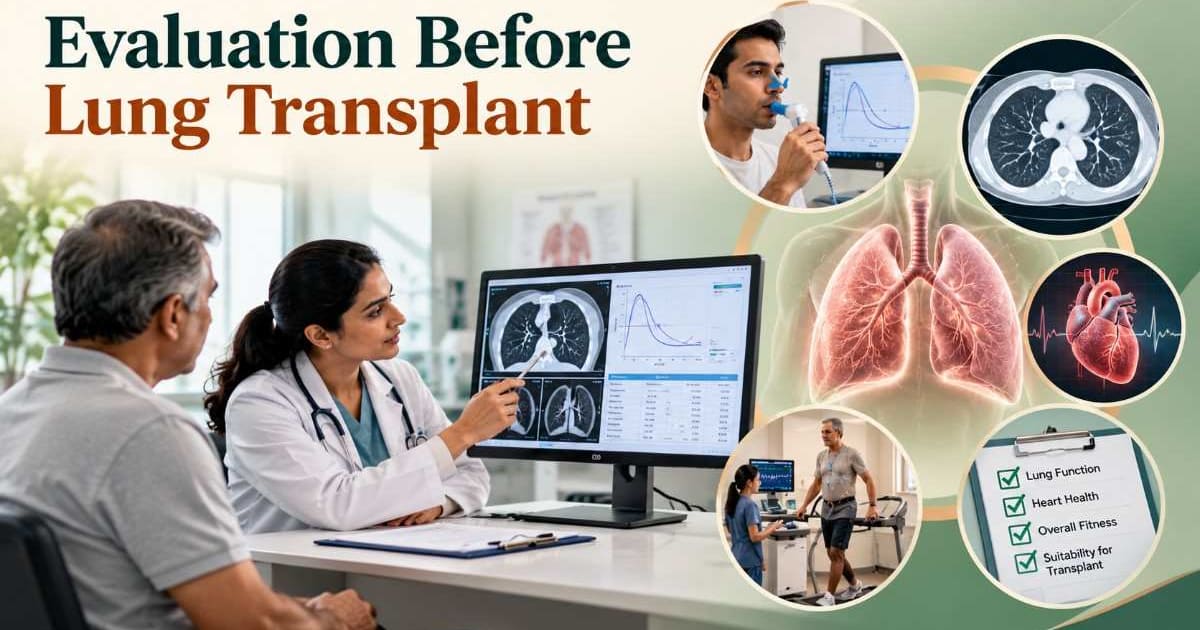
Before transplantation, patients undergo detailed testing to determine whether they are suitable candidates. Evaluation may include:
Pulmonary function tests
Chest imaging such as CT scans
Blood and blood group tests
Heart assessment
Kidney and liver function tests
Infection screening
Medication and nutritional assessment
The team also considers other health conditions that could affect surgery or recovery.
Donor Matching and Waiting
Once a patient is considered suitable, they may be placed on a transplant waiting list according to the applicable transplant system. When donor lungs become available, factors such as blood group, body size, medical urgency, organ condition and compatibility are considered. The waiting period varies between patients because suitable donor lungs are limited.
Lung Transplant Surgery Procedure
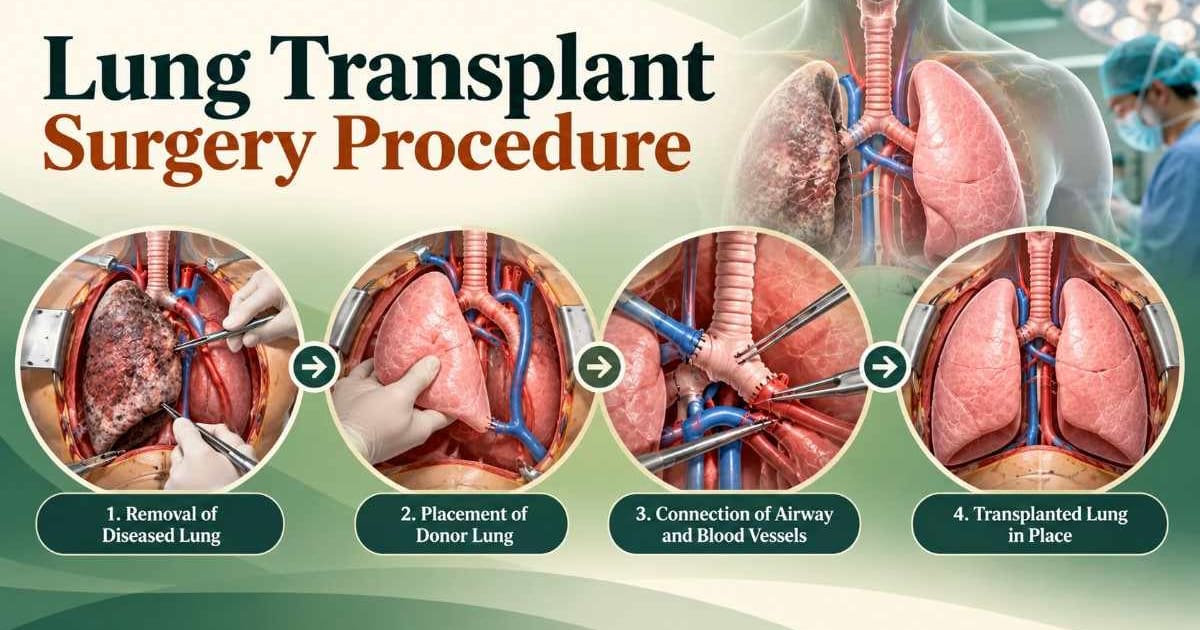
The exact operation depends on whether one or both lungs are being transplanted.
General Anaesthesia
The patient receives general anaesthesia and remains unconscious during surgery. A ventilator supports breathing throughout the procedure.
Removing the Diseased Lung
The surgeon accesses the chest and removes the diseased lung. In a double transplant, both lungs are removed.
Placing the Donor Lung
The donor lung is positioned inside the chest and prepared for connection.
Connecting the Airway and Blood Vessels
The donor lung's bronchus is connected to the recipient's airway. The pulmonary blood vessels are also connected so blood can flow through the new lung. This airway connection is known as a bronchial anastomosis.
Completing the Surgery
After the connections are completed, the surgical team checks the transplanted lung and restores normal blood flow. Chest tubes may be placed to drain air and fluid. In some cases, cardiopulmonary bypass or ECMO may be required to support circulation and oxygenation during surgery.
Lung Transplant Surgery Duration
Lung transplant surgery takes several hours. A single lung transplant generally takes less time than a double lung transplant.
The exact duration depends on the patient's condition, type of transplant and whether additional support is required.
Immediate Care After Surgery
After the operation, the patient is usually transferred to the ICU.
A ventilator may be needed initially, along with chest tubes and intravenous medicines. Doctors closely monitor lung function, oxygen levels, circulation, kidney function and possible complications.
Immunosuppressive medicines are started to reduce the risk of rejection.
Risks and Complications
Lung transplantation is a complex procedure with potential complications.
Rejection
The immune system may attack the transplanted lung. Immunosuppressive medicines help reduce this risk, but rejection can still occur.
Infection
Immunosuppressive treatment can increase vulnerability to infections, making monitoring especially important.
Other Complications
Possible complications include:
Bleeding
Blood clots
Airway problems
Kidney problems
Diabetes related to treatment
Medication side effects
Reduced lung function
Individual risks vary depending on the patient's health and circumstances.
Recovery After Lung Transplant

Recovery happens gradually and may take several months.
ICU recovery: The patient is closely monitored while breathing and other body functions stabilize.
Hospital recovery: Care continues after leaving the ICU, with monitoring of lung function, medications, wound healing and complications.
Rehabilitation: Physical therapy and pulmonary rehabilitation help rebuild strength and improve activity levels.
Home recovery: After discharge, patients need regular follow-ups and must take their prescribed medicines consistently.
Long-Term Recovery and Life After Transplant

Lung transplantation requires lifelong medical follow-up. Immunosuppressive medicines are generally continued to reduce rejection risk. Follow-up may include lung function tests, blood tests, imaging and bronchoscopy when required. Medication doses may also be adjusted according to test results and the patient's condition. Following the treatment plan and reporting new symptoms early are important for protecting the transplanted lung.
Warning Signs After Lung Transplant
Patients should contact their transplant team if they develop:
Increasing breathlessness
New or worsening cough
Fever
Unusual fatigue
Chest discomfort
Sudden reduction in exercise tolerance
These symptoms can have different causes, but they require medical assessment.
When to Consult a Lung Transplant Specialist
Patients with advanced progressive lung disease, worsening breathing problems, declining lung function or repeated hospitalisations may need specialist assessment.
A lung specialist can determine whether further treatment or transplant evaluation should be considered.
Finding the Right Specialist for Lung Transplantation
Lung transplantation involves a multidisciplinary team including pulmonologists, transplant surgeons, critical care specialists and rehabilitation professionals.
If you need help finding an appropriate specialist or exploring hospitals for treatment, GetBeds can help you connect with the right medical care and support your consultation journey.
Conclusion
Lung transplant surgery is a complex treatment for selected patients with severe lung disease. The journey includes evaluation, donor matching, surgery, ICU care, rehabilitation and lifelong follow-up.
Understanding the procedure and recovery process can help patients and families prepare for discussions with their medical team and understand what to expect.
Frequently Asked Questions
The procedure involves general anaesthesia, removal of the diseased lung, placement of the donor lung, connection of the airway and blood vessels, restoration of blood flow and postoperative monitoring.
It usually takes several hours. The duration varies depending on whether one or both lungs are transplanted and the patient's condition.
General anaesthesia is used, so the patient remains unconscious throughout the operation.
The patient is usually moved to the ICU for monitoring. Ventilator support, chest tubes, medicines and immunosuppressive treatment may be required.
The donor lung is connected to the recipient's airway and pulmonary blood vessels, allowing air and blood to flow through the transplanted lung.
Disclaimer:
This blog is for informational purposes only and does not constitute scientific recommendations. Always consult a certified healthcare expert for analysis and remedies.